Showing posts with label bronze. Show all posts
new works by Ricky Swallow
@ Marc Foxx, opens tonight

"The narratives that these new works create ask for quiet reflection on what might be considered the small pleasures of life, as they are made in proximity to our daily rituals in the moments where object-hood is more than just function or form, but rather an intimate relationship and exchange with ourselves."
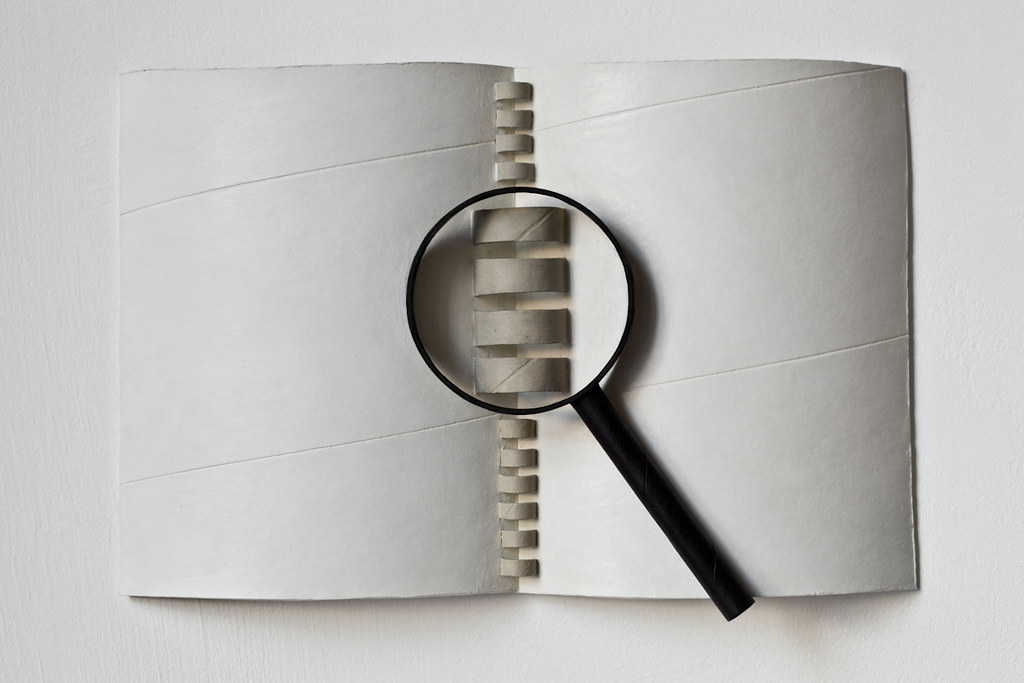


Binder With Magnifying Glass 2011 Patinated Bronze.


Ricky Swallow
ʼs practice has always addressed materiality and transformation, as seen with his previous woodcarvings and their processes of reduction. This new area of Swallowʼs practice involves addition, improvisation and construction. The subtle evidence of the cardboard and tape used to construct the original model is quietly at play on the tactile surfaces of the works. The artistʼs careful and specific use of color in the patinas references utilitarianism, modernism and the rudimentary design palettes of Native American Art. The color of the patinas seem effortless, but are, in fact, a very intricate process, which is in contrast to a classical, more traditional approach to treating bronze. References can also be seen in this collection from Mid-Century modernist art, design, architecture and ceramics.

Variations on the form of the French curve appear throughout the show as an adaptive and playful motif, which echoes the nature of the cardboard tubing material from which each work was created. The use of the top hat, in “Blowing Hats”, 2011 and “Hat Clock/Open Study”, 2011 has been adapted to signify both playful dynamism as well as formal contemplation.
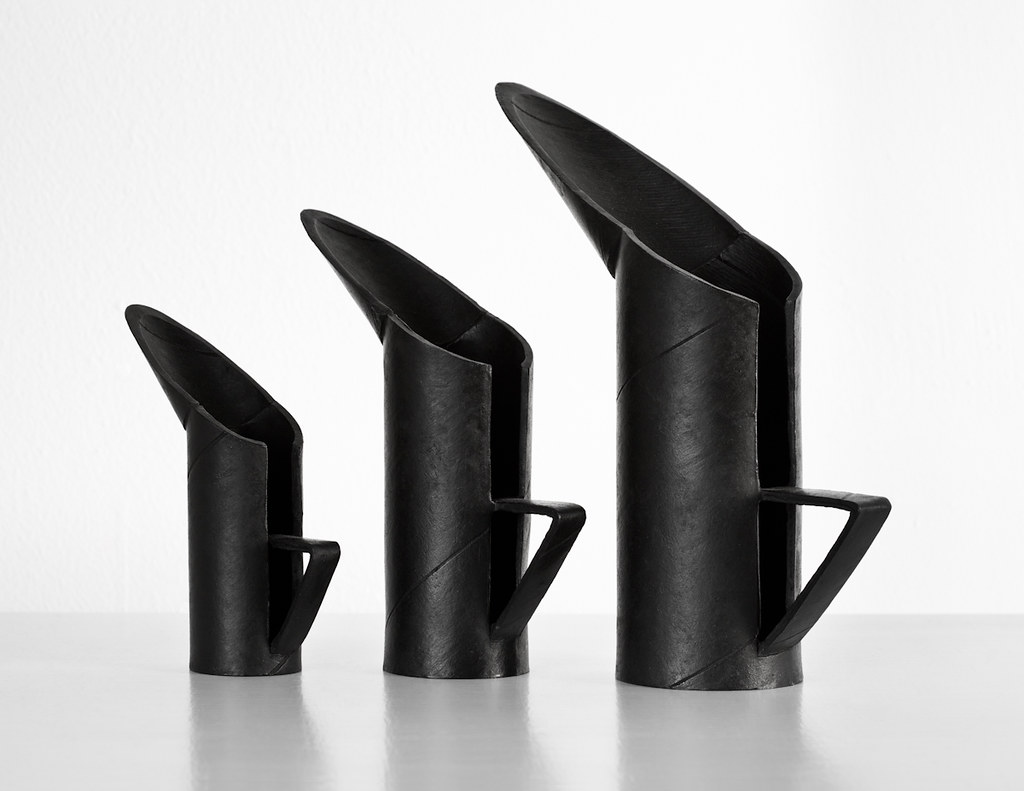
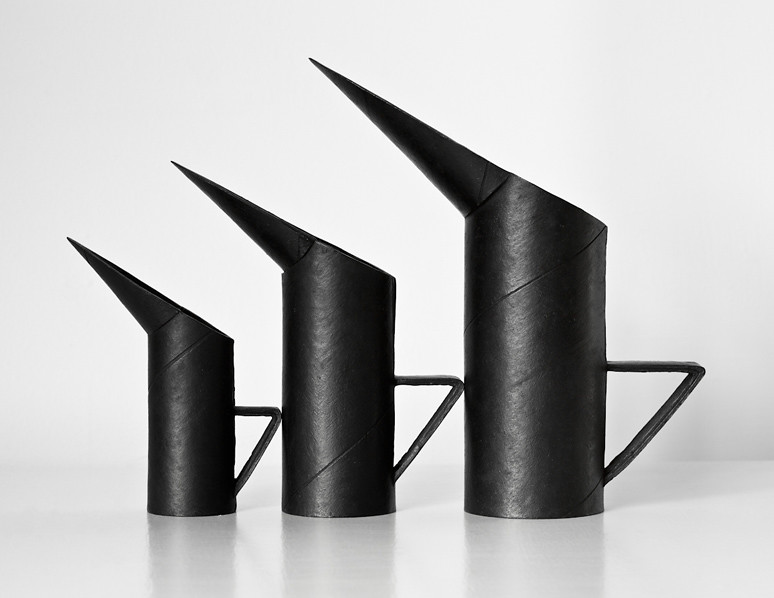


Ricky Swallow, at Marc Foxx
November 19 - December 22, 2011

all text courtesy of Marc Foxx


----------------------
American Modernism : Modern Americana


Paul Evans + more .

WRIGHT'S Annual No Reserve Auction
previews begin July 5


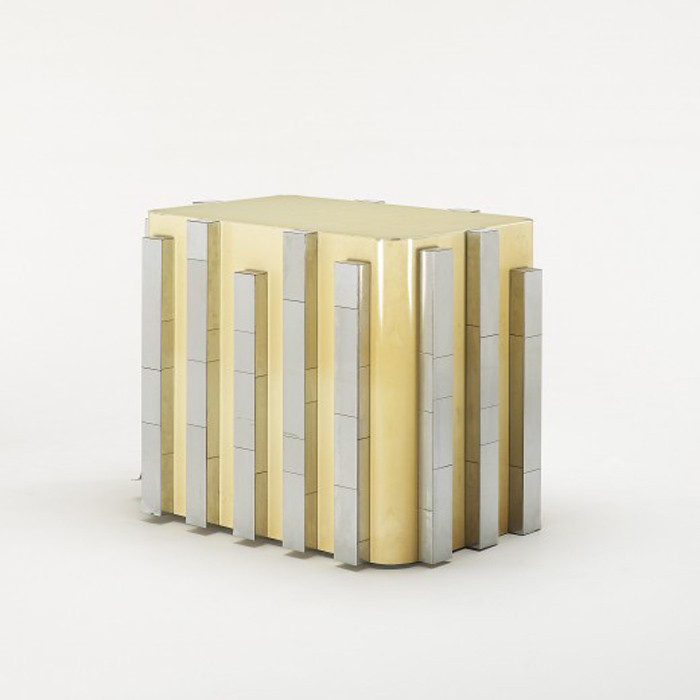
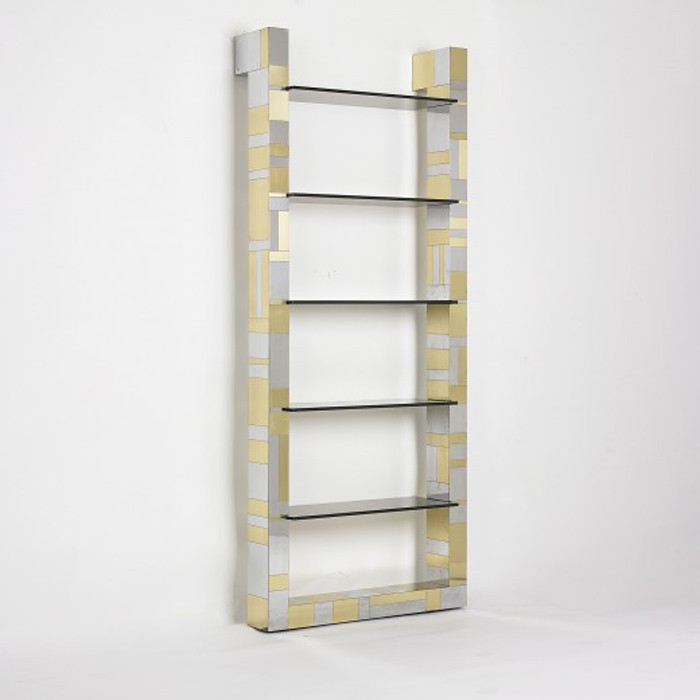
Paul Evans Cityscape bookshelf Paul Evans Studio for Directional USA, c. 1975
Paul Evans table base Paul Evans Studio USA, c. 1970,


Wright’s spring 2011 auction season comes to a close with their annual MASS MODERN auction on July 9th. This no reserve sale features nearly 500 lots of modern design. From Tank lounge chairs by Alvar Aalto, to Ball wall clocks by George Nelson & Associates, to a Giada decanter by Toni Zuccheri.


Chrome-plated steel, brass, and glass, oh dear me ! These works of Paul Evans capture my full attention as I sit, typing, imagining them in dark wall to wall carpet rooms, deep conversations pits perhaps below old dusty disco balls. Stacked records out of their sleeves, water rings marks, half parted curtains that look onto a New York 5 am sunrise. The sounds of bankers and brokers scurrying to their desks and joggers taking the first leaps of the early morning. Perhaps this is the time of day these works came most alive? The sun beginning to glisten the materials of these shelves. American Modernism. Modern Americana.


What did it feel like to be in truly MODERN in 1970 in Manhattan?


I recently purchased the book, Modern Americana: Studio Furniture From High Craft to High Glam by Todd Merrill and Julie Iovine, by Rizzoli. I've flipped through it in bookstores, but finally made the plunge. I've been looking for a book on these works specifically, or an interview with Paul Evans about this pieces. (Please pass on if you have one.)


Buck's Magazine 2008 states: " The Sculpted Bronze tables beloved by Manhattanites had tops of glass, slate or, occasionally, wood and radically shaped bases: cubes, arches, serpentines, stalagmites. He made tables in copper, bronze, pewter and the welded aluminum called argente and tables with bases designed to resemble skyscrapers. All challenged conventional notions of furniture design – and continue to do so, even today."


"In 1981 Evans opened his own showroom in New York City, stocked with prototypes and some motorized furniture. He got a substantial order from a Saudi Arabian princess, but the Plumsteadville factory kept him in debt, and in 1987 he retired. He was 56 years old and headed with his wife to Nantucket, Massachusetts, where he had a heart attack and died. A market for his work developed immediately, and since 2005 it has been in high gear. Fakes and copies were made.

Iovine says Evans's work anticipated the limited-edition furniture of today. Phillip Powell, with whom Evans shared a studio in New Hope, never wanted to make production furniture or make deadlines. " (taken from Merrill Antiques here)


Portrait of a Man pt 27

"to be a man, is to be torn inside"
aka
"man's ulterior motives"

(see all portraits of men here.)


-------------


u l t e r i o r
1. adj. being beyond what is seen or avowed; intentionally kept concealed: ulterior motives.


Synonyms 1. hidden, covert, undisclosed, undivulged.


----------------


Portrait of a Man pt 27

"to be a man, is to be torn inside"
aka
"man's ulterior motives"


1. unknown image
2. Gavin Turk, new work, via Almine Rech gallery, here..
3. Francesco Barocco, here, via Norma Mangione Gallery


(see all portraits of men here.)


----------------------------


Ingrid Donat

Ingrid
Donat,
sculptured
furniture.


Tabla Basses Tout Bronze - Polished, 2008

Polished Bronze


Donat learned the art of construction, casting, engraving,
patinating and sculpture in general. During the same year,
she met Diego Giacometti who advised Donat to design her own sculpted furniture.
Other influences were Egon Schiele, Georges Mine, Germaine Richier.
Inspiration for materials and colors come from primitive and tribal arts,
the elegance of Art Deco, and organic forms of Art Nouveau. In 1981,
the sculptor Cesar, who recognized Donat as a talented artist,
encouraged her to follow her own style and identity rather than return to school.
For the past twenty years, Donat has been creating a body of work that she only began
to exhibit publicly in 1998.


Donat engraves the bronzes, painted upholstery and treated wood.

Each piece is cast in limited editions of 8 at Blanchet-Landowski Foundry
under the guidance of the artist. Each piece is initialed by the artist,
has the foundry stamp, and is accompanied by a certificate of authenticity from Ingrid Donat.


Donat currently lives and works outside of Paris.


---------------
don't
ever
part.


Jonathan Nesci

mirror-polished bronze
Limited Edition of 20 + 2 A.P.

go here for more!


.

portrait of a head
pt 3
(mixed emotions: bronze and cermaic)


(go see his work here!)


portrait of a head
pt 3
(mixed emotions.)
bronze and ceramic.


images from top to bottom.
1. ruan hoffman, cermaic work here.
2. leonard baskin, bronze
3. paul forney, c/o young art gallery, los angeles
4. abbott l. pattison, 1998, bronze


side tables.
wood and cast bronze.


Chista
see more images from showroom here..


two alexanders. to grasp and crawl.

alexander calder, bronze,
alexander wolf, quilt, velevet and cotton


Barbara Hepworth
1903-1975

Helicoids in Sphere
1938


"Hepworth was an artist of extraordinary stature whose importance is still to some extent occluded. Over 50 years, from 1925 to her death in 1975, she made more than 600 works of sculpture remarkable in range and emotional force. Her private life was complicated, at times traumatic: two marriages and four children, three of whom were triplets. And there was the long disruption of the war. What makes Hepworth wonderful was the strength of her ambition, the unswerving self-belief. She demonstrated so tangibly her understanding that "the dictates of work are as compelling for a woman as for a man"

read full article here....


oval sculpture
1943


Group of three magic stones
1973
silver


By the mid-1960s, her health was breaking down. Cancer of the tongue was diagnosed. A fall resulted in a fracture of the hip. From then on she was often seen walking with a stick. Hepworth worked on, gnarled and baleful, like a figure in a Greek tragedy. In those last years before her accidental death by fire in her own house, she returned to smaller carvings - to themes of myth and magic, to the gravitas and stillness that was so strong in her.