Showing posts with label YHBHS interview. Show all posts

a conversation with LEADAPRON


I think at root they (my careers) are all attempts to express myself through a discipline and to understand something about what it means to be a sentient human being. - Jonathan Brown

"You see, unfortunately I am an E X P L O R E R." - Lucio Fontana


(all photos by Marco Annunziata and David John)


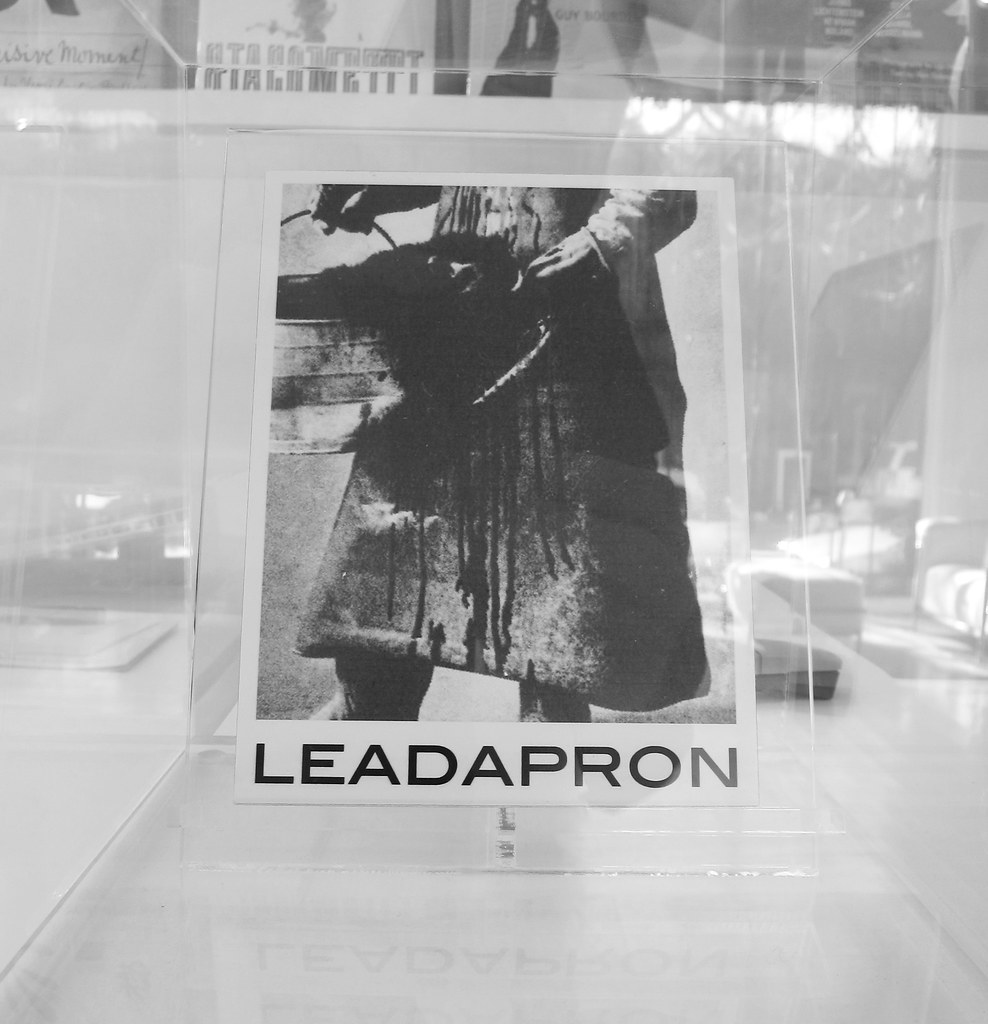
LEADAPRON is a capsule on Melrose Place that sells rare, signed, out-of-print art and photography books. Select titles, including books on Andree Putman, Pierre Chaveau, Basquiat, Ed Ruscha, Donald Judd, and Lucio Fontana line the shelves. Jonathan Brown, owner, is a collector, and it takes only a moment to realize that this is not your ordinary book store. It's a place that merges design, interiors, and art effortlessly. Plexiglass boxes containing postcards, books, organized in a manner that speaks of space, time, and history are scattered puroposely throughout the open and vaulted rooms. Skylights cast quiet shadows and dance upon the whiteness of the walls and floors. In one collection is rare Ed Ruscha books, while printed works on Lucio Fontana's punctured canvases dominate another tall bookshelf.


I am not interested in the kind of space you are talking about mine is a different dimension. The hole is this dimension. I say dimension because I cannot think what other word to use.

- Lucio Fontana
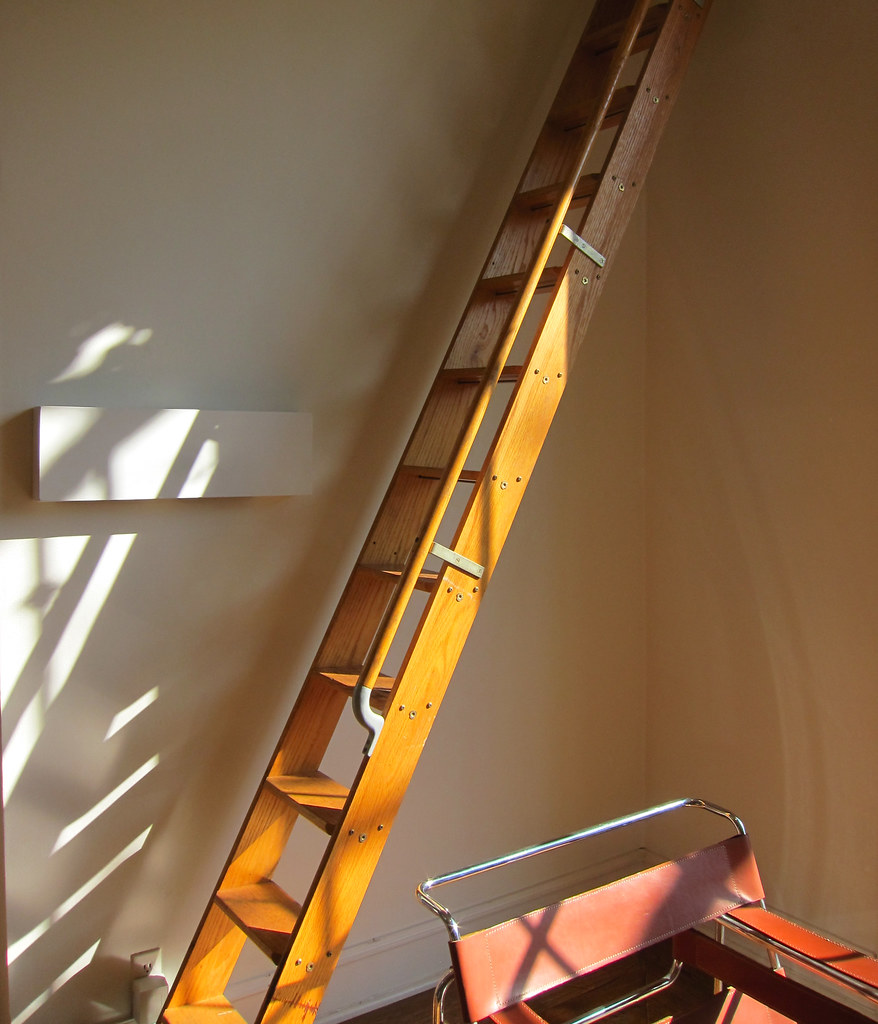


What is LEADAPRON, and how long has it been around?

Jonathan: LEADAPRON began as Leadapron Productions 15 years ago. I was directing theatre in Manhattan. I came up with the name during my production of the Maids by Jean Genet. A Leadapron is what you wear when you get an xray.

In short, its a protective shield.


What was in this space before Leadapron? Did you have to do any renovations when you moved in?


Rose Tarlow Melrose House. I built a few walls, a front reception booth and shelves to showcase books and artworks, painted it many times, and added track lighting, etc....I changed some small details like switches and the locks, etc, and added a few fixtures throughout. At the time it felt like quite a bit, but I essentially just tried to make the space a blank white canvas so it would disappear and the objects that I placed inside would pop. I still walk around making minor renovations all the time...just refining the space endlessly.
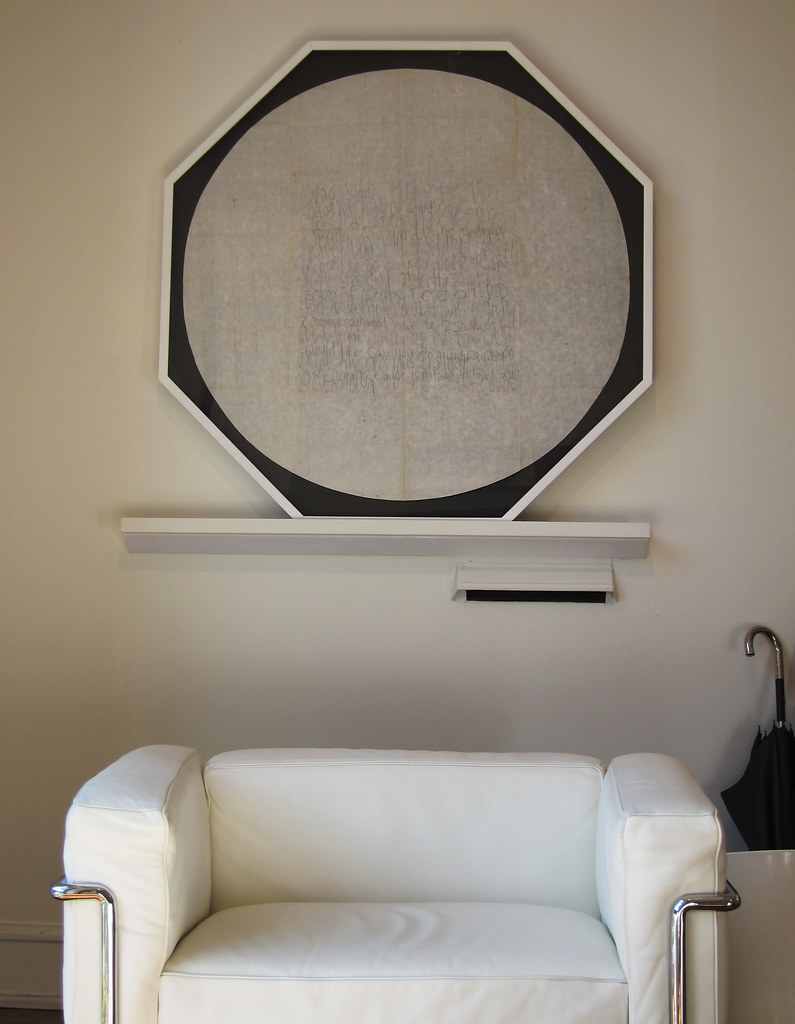
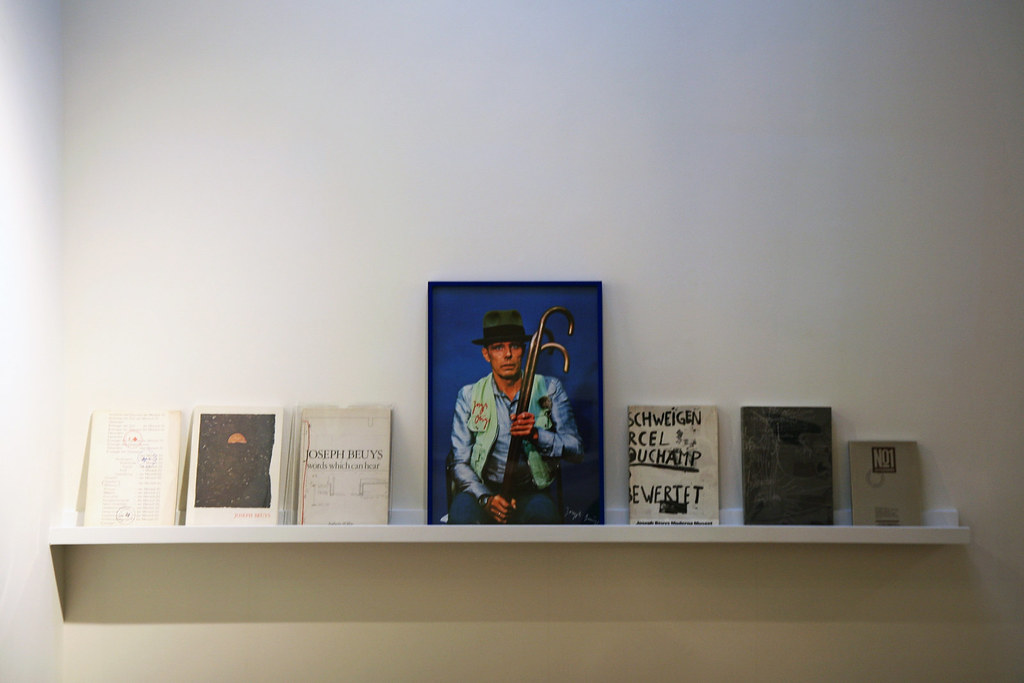


I've seen some amazing shows, such as the recent James Lee Byars show in your gallery space. But, you also show collections of books, such as Donald Judd, Fontana.

Are the works from your personal collection?


Thank you for the compliment. The artists you mentioned are personal favorites. I show what I like. I spent 2 years assembling the Byars works. I suppose you could say that everything in the gallery is my personal collection, but it is for sale as well so I am just a temporary guardian. I keep a few works, but then sell them later only to replace them with something else.


What sort of work did you did before LEADAPRON?

In brief it went like this: Philosophy, architecture, draftsman, boxer, theatre director, writer, behavioral neuroscience, dealer.

Ok, tell me more about all these prior careers.
Is there something that links all of these occupations together you think?

Very good question. I think at root they are all attempts to express myself through a discipline and to understand something about what it means to be a sentient human being. Some are more murky waters to navigate and others might have been too direct or too clear. Some are too mental, others too physical or abstract. A dealer has to embody and encompass all of these disciplines should he be effective. He or she needs to have a perspective, an aesthetic, a sense of design and space, a daring, be able to direct and stage events and most importantly have a sense of what his/her clients want or need and furthermore, they should be able, though charm or ingenuity or force of personality to convey to their clients their ability to both understand and provide.

Where are you from? How long have you been in LA?


I was born in Korea, and then we moved around from Boston to San Francisco to settle in New York. I spent a year living in France as a child, which was wonderful. I mainly grew up in Bronxville, NY, which is a suburb 30 minutes from Manhattan. An idyllic little town with lots of tudor homes and cobblestone streets. Nothing bad ever happened there outside of perhaps the town drunk or a few divorces. If I didn’t grow up there it wouldn’t be a bad place to raise my kids.
At 18 I moved to NYC for 15 years. I’ve been in Los Angeles for the last 10 years.

Why do you think you are interested in objects? what do they mean to you? what is the obsession?


We learn about the world by manipulating objects as a child and I think this extends into adulthood. I enjoy the visual dialogue with objects. They probably give some sense of order or permanence to our lives and add to one’s narrative about their life. I practice letting them go, which is also a healthy disciple. Perhaps they punctuate space and make me aware that I exist, am existing and won’t exist someday....just like art, music and even friends.


In your office, there is an amazing collection of objects and art on your desk. Can you tell me about any of these works?
What sort of works do you collect?

What were you doing in my office??? Just kidding. I've been collecting chairs.


What sort of chairs have you been collecting?


Gio Ponti, Donald Judd, Mario Botta, Gae Aulenti, etc... I just like placing them around the gallery and in my house. They make me happy. There is something about chairs that are more than sculptures (aside from their functionality). They seem half alive, which is just enough to make them endearing.

Any upcoming artists you collect or are very interested in?


Christopher Astley. He works in concrete. I am planning a show of 5 of his sculptures. He's a cross between John Chamberlain, Philip Guston, Chaim Soutine, Francis Bacon and Claes Oldenburg.

What is the attraction to James Lee Byars' work?


It's simplicity, freshness, evanescence, fragility, beauty, intelligence and ethereal-ness. Byars had a great sense of humor and play, he confronted his audience with boldness and courage and developed his own vocabulary while keeping it universal. He is totemic, mystical and truly mysterious. I do believe that Byars was one of the most important artist of the late 20th Century.
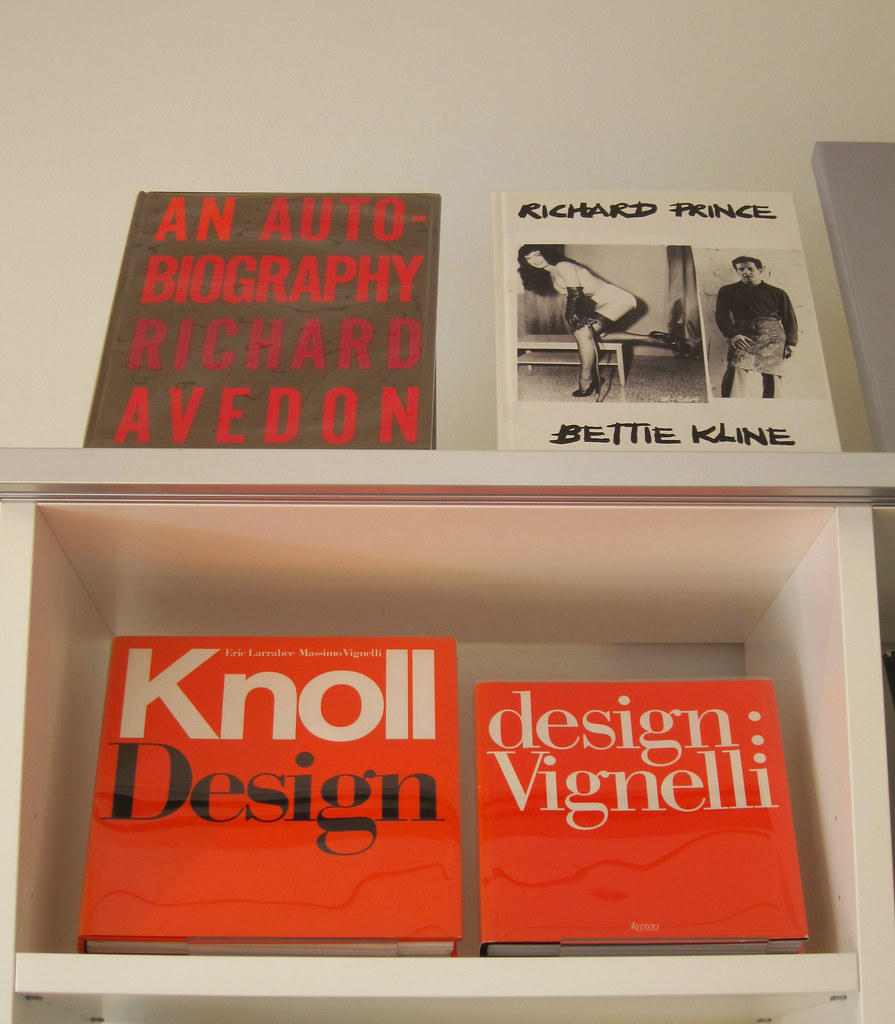


Is it difficult to run a book store in the age of the internet?

Not really. The internet helps with sales.

Any favorite galleries/stores in Los Angeles?

I like Earth Bar, Yves Saint Laurent, Prism & OH WOW. Mind and Body all covered.

What can we expect from Leadapron in 2012?

I would say more, but smaller shows. Instead of trying to be bigger and better I would like to get back to basics and create thoughtful, almost salon style shows...and of course we will continue to provide our selection of rare, unique, out of print, signed art, photography, fashion and design books.

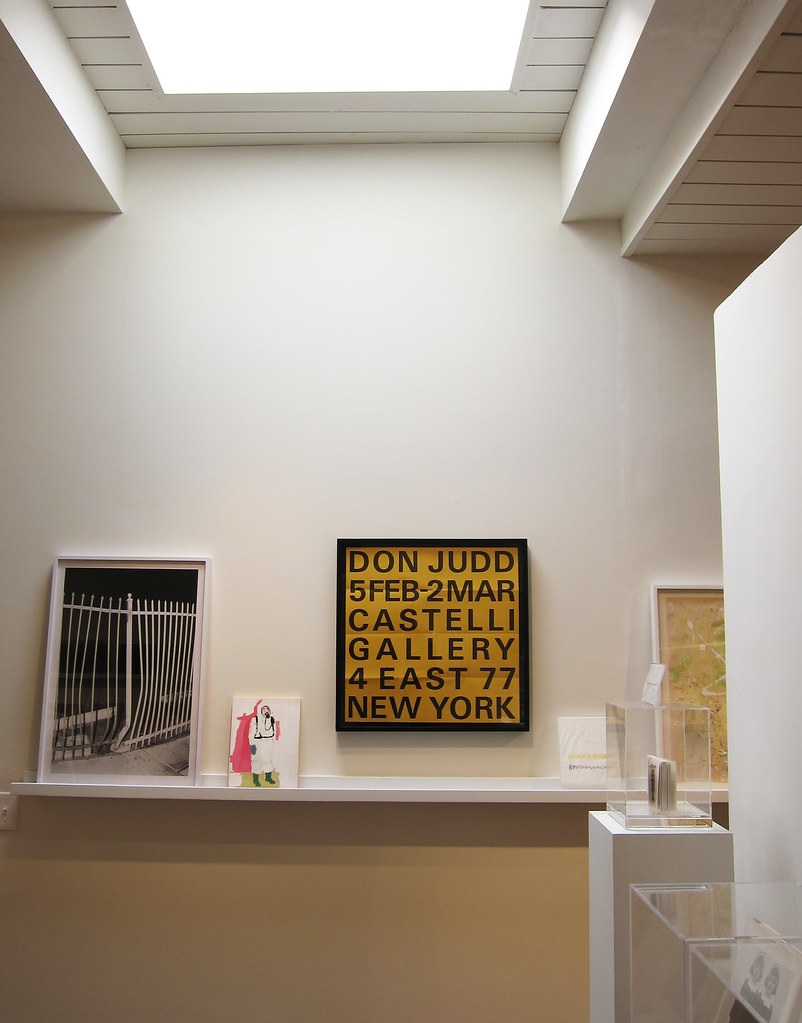


LEADAPRON
8445 Melrose Place, Los Angeles CA 90069


----------------------

YHBHS interview with MARI ANDREWS

....
"I often make up words for titles, sometimes even in fake Latin. I love all those syllables and how they roll off the tongue. I like to misspell words so the title becomes understood phonetically. Other times I use verbs, or descriptive passages, or lines of poetry. Titles come about in many ways."

- Mari Andrews


the studio of Mari Andrews....


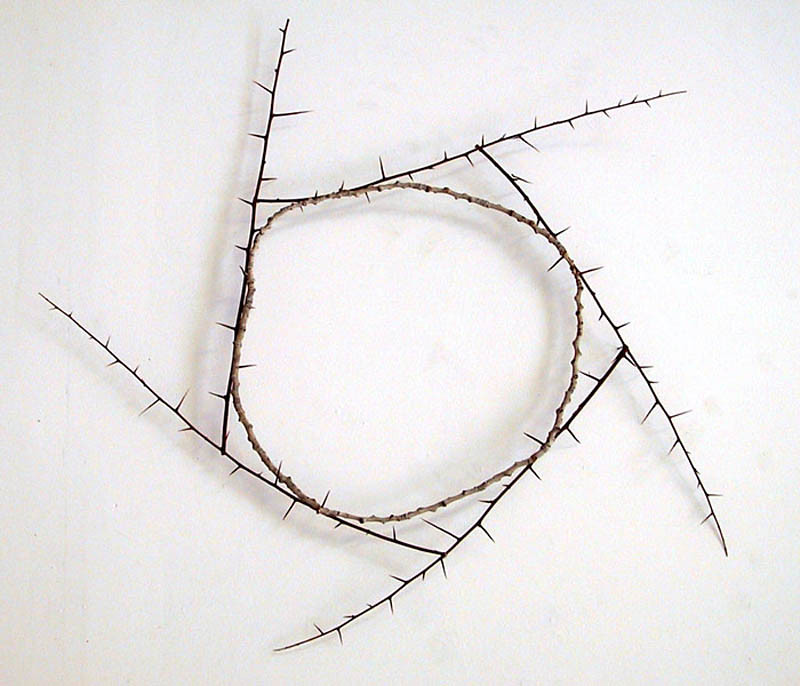
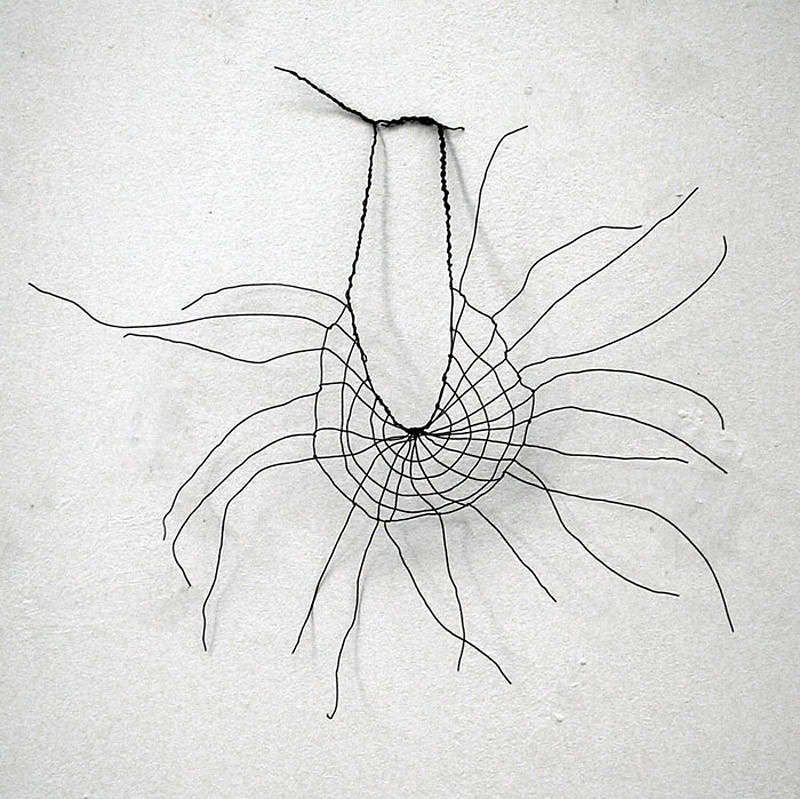
Mari Andrews has been working for over twenty years with materials that some might walk past, not even stopping to think twice about what they are actually seeing. The first time I discovered Mari's work, I connected to a sense of quiet purpose in her work, a sense of doodling with forms and abandoned materials, creating subtle arrangements in space. Her twisted thorns, lichens, and dangling rocks recall the art of ikebana, a quest for balance and beauty. But her formations of silicone coated wires make me think of mindless afternoons sketching, or the curves of the road that lead to Big Sur, also known as the Pacific Coast Highway. It's as if she has created maps with the objects she has discovered upon her own walks and trips, and drew them on the wall for us to use. If these works are maps to an unknown land, you'll see me on the other-side, looking for bubbling fountains and endless mountain views. Thank you Mari......

Mari Andrews' work is part of a summer group exhibition at JK Gallery in Los Angles.


2 untitled works from 2000


Can you talk about your choice of materials you work with for your sculptures? And how they came about?

I work primarily with annealed steel wire which is black. It feels like a pencil line to me. (Almost everything I make I consider to be a continuation of my drawing practice.) Sometimes I add black silicone to the wire, and then it becomes a charcoal line. I combine various man-made and found materials with the wire, to make "hybrids". I have collected found objects for decades and it was very satisfying to bring these objects into the work - a synthesizing Eureka moment actually. Sometimes the collected material will spark an idea for a sculpture. Other times I have a fairly solid concept or drawn-up plans and look about my raw materials to select the right combination of things to carry out that idea. I have also sought out things to make or complete a piece. This is true of the lichen in "Lichen Square" in my upcoming JK Gallery show. I needed a batch of lichen and headed to the Northern California coastal range to collect it.


Where do you collect the materials for your works?

I collect all the time, although I have had to become more discerning for lack of space. I take walks in the city and pick up human detritus from the street. There is rusted metal wire and odd bits on construction and destruction sites, also along railroad tracks. I collect seeds, leaves, pods and branches while hiking, stones while walking river beds, other stuff washes up on coastal shores. I sometimes use kitchen compost like squash or melon seeds, and garden trimmings, too. Once in a great while people will bring me their findings. I take donations .


If you were not a sculptor, you might be.....? A biologist, botanist, geologist, and maybe a sociologist.


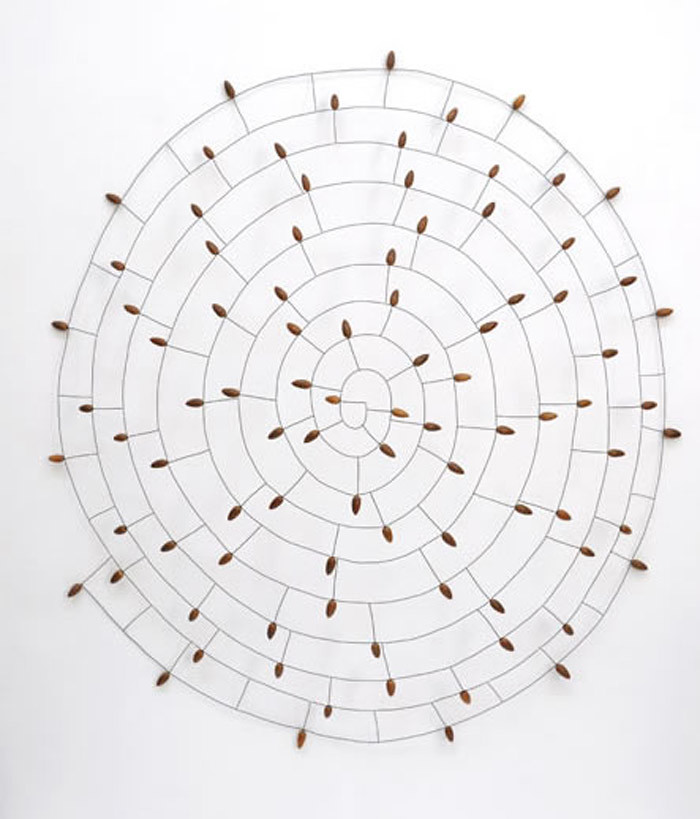
Accoil, 2009, wire and acorns


What does "Acocoil" mean? or "Alphanet"? How do your titles comes about, and what are they referencing?

"Acocoil" is a hybrid of the words Acorn and Coil, I made it up. It is a very basic description of form and materials used in the sculpture. The sculpture "Alphanet" contains 26 manzanita leaves attached to the ends of a wire mesh. Each leaf has an alphabet pasta glued to the face of the leaf. Twenty-five different letters were used with one repeated, so not every letter of the alphabet is represented, one is missing. It couldn't be perfect in my mind, so I made a "purposeful error", like in a Navajo rug. So "Alphanet" is also, a hybrid of a couple of words. I often make up words for titles, sometimes even in fake Latin. I love all those syllables and how they roll off the tongue. I like to misspell words so the title becomes understood phonetically. Other times I use verbs, or descriptive passages, or lines of poetry. Titles come about in many ways.


"For the most part these three-dimensional drawings are presented on the wall. They are made as singular pieces and often come together in larger wall installations. The individual works relate to and play off of each other like words forming sentences or sentences telling a story. "
What are you communicating with your works, what is one of the many stories you are telling?


The quote about "telling a story" is a really a metaphor for the way the sculptures interact with one another. They are like family members, related but different. They can stand alone or be read as a group of "related" elements. When they are presented together I feel that there is a richer, more complete vocabulary of form. I'd like viewers to walk away from my work with a deeper curiosity/observation of one's surroundings. This includes our urban environments as well as the natural ones. Perhaps if we slow down and take in what is around us we will be more inclined to appreciate and protect what we have left of our natural environment. So there is an underlying environmental message.


You mentioned, the objects often times reflect our "human sensitivities and vulnerabilities." Will you talk about this?

I believe that the delicacy and tenderness of some of the materials I use have similar qualities to human emotion, human condition. The objects can be physically fragile; they age, crack, break, fade. Some are sturdy but flexible like the willow. Some are thorny and defensive like cactus spikes. Some look thorny but are soft and pliable - as in silicone. The combination of materials sometimes yield humorous effects - - another very important human quality, I believe. The hundreds of "paperless drawings" I have made are representative of the diversity found in our society; the multitude of people, cultural backgrounds, points of view.


Who or what captivates your attention?
Bees, human psychology, long vistas, my garden, the western state deserts, high altitude streams, liberal politics, petroglyphs, abandoned mines, sense memory, obsolete tools, the oldest living things, spiders, poetry....


Among artists?
Ann Hamilton, Anish Kapoor, Martin Puryear, Gego, Herman de Vries, Terry Winters, Eva Hesse, Kiki Smith.....


Does your work ever frustrate you?
Oh yeah! I'm not technically as proficient as I'd like to be to carry out some ideas. I also find that some ideas are difficult to translate into any materials.


circuit 2006, wire and silicone


please take a look at Mari Andrews' site.

Mari Andrews July 16, 2011 — August 20, 2011
JK Gallery, Los Angeles
2632 S. La Cienega Blvd. Los Angeles, CA 90034


----------------------

YHBHS interview with James Clarkson


" I think there are these chains of design history where an initial idea is made by one designer, and where he leaves it, another picks it up, and the process continues till you end up with this kind of inbred mutant object which has a very very rich in history. But its position, what you might call cultural value, is actually very low because its overly mass produced."

"What I want to do is try and address that by looking at the past and understanding why the graphics on my phone and the furniture on the high street look like elements of modernist abstract painting or a piece of Bruno Mathsson Furniture and highlight that."


-James Clarkson


top image:"Ordering of Colour and Form", Mixed Media, 2010

bottom image "A silver tear from a stone soul" 2010


"James Clarkson’s practice addresses a HEDONISTIC IDEALSIM surrounding modernist art, design and interior living. He creates sculptures and paintings, which act as references or cultural signifiers, exploring historical contradictions between high art & design and low-end mass production. He is interested in the relationship between form, functionalism and meaning as modes of value and experience. His work looks to the past as a means of understanding the way we live now, whilst retaining an ambiguity for past, present and future"


YHBHS: "Hedonistic Idealism" Do you idealize the past? There is a strong emergence of young artists and designers being energized by the works of furniture designers and sculptors that range from Sottsass, Brancussi, Superstudio, to name a tiny few. Will you talk about this in relation to your work?


JC: I think when I used the term "hedonistic idealism," I was trying to talk about what you are describing as, ‘the strong emergence of young artists and designers.’ What I want to do is try and address that by looking at the past and understanding why the graphics on my phone and the furniture on the high street look like elements of modernist abstract painting or a piece of Bruno Mathsson Furniture and highlight that.

I think there are these chains of design history where an initial idea is made by one designer and where he leaves it anther picks it up and the process continues till you end up with this kind of inbred mutant object which has very very rich in history, but its position, what you might call cultural value, is actually very low because its overly mass produced. A good example of this is the West Germany Pottery Group. I am really interested in those systems of value and how they can be broken down into objects. I try and use elements of these objects, formally, in my sculptures. A lot of the time these objects will have some form of visual manifesto that makes them distinguishable, whether that be a certain wavy line or some form of patternation.

You are right though there is an incredibly large amount of artists practicing like this at the moment it can be quite overwhelming really. Some of my favourites though are Mathew Dearbyshire, Martin Boyce, Eva Berendes, George Henry Longley, Karin Ruggaber and Giles Round. I also worked as an artist assistant to Haroon Mirza, whose practice works slightly differently to the others above, but this was hugely key to the way I have developed as an artist. I started work form him more or less straight after university, the process became like a second education, which I was very grateful for.


You mentioned that your father collected antiques. What sort of antiques did he collect? Any specific items, were there any as a kid that captivated your imagination?

He still collects antiques now, so whenever I go home I find it an incredibly exciting time, things that I really like will have been moved on and in their place something new. It was much like this when I was a child. There would always be new things moving through the house, a lot of ceramics and sometimes furniture.

My dad once had a Bruno Mathsson chair, which is something I remember quite vividly, as well as a really large collection of Franz Hagenauer Bronzes. Both have gone now and one of the only things that lives on from when I was younger is his collection of rare Poole Plane Ware. As a child I was really fixated by everything we had and how it was so different to a lot of other things I would see on a daily basis. Now I am really interested by the idea that the legacy of modernism is something we have to live with on a daily basis. My father collecting these things made that a really smooth transition and when I first started to make artwork my concerns were always with this in mind, one way or another. A lot of the things I saw around me just seemed so lodged in the modes of thinking behind modernism or were forming a very rigid language around it, I saw something really positive in that, but never really put much thought into it until now.


How important is "tension" in your work?

I guess tension is something that is physically present in a lot of sculpture historically. It’s not something that I put a lot of thought into when making work. I am more concerned with formal arrangements of line and the balance between objects, sometimes this might create a physical tension, but it could be totally incidental and I really like that kind of thing happening.

I do think of tension in a more conceptual way though. The tension between sculpture and abstract painting is particularly important in the way I go about making my work. In particular the teachings of Josef Itten, at the Bauhaus school of art and design during the year of 1931. Itten made his students dismantle an object placed in front of them into a painting its basic formal Shapes and colours. The painting would then be used as an instruction for the creation of furniture or sculpture. Recently I have been using this process with a lot of the works I am making for an upcoming exhibition. Working like this allows the process of making to implement an environment where potentially there isn't much difference between the object and its surrounding material, or where that interaction is entirely alluded to through nuance, abstractions and conceptual activity.


images of Frey House II (top), Gio Ponti’s Residential Building Via Dezza (bottom)


YHBHS: What are you ideas of what a "home" or "interior space" should be? I read in an interview that you are fascinated with the Frey House II. Can you talk about your interest in that home?

JC: What I find particularly interesting about the Frey House II is its harmony within the environment it sits. The way the clean, straight edges seamlessly balance the giant rock that intersects the window; it makes the whole thing quite sculptural. Especially when you transfer that into a photograph, it looks very strange, almost not real, I like that. So perhaps the FrLinkey house is not really somewhere I would like to live, perhaps just visit a couple of times.

My idea of what an ‘interior space’ should be in regards to the ‘home’ is probably something more like Gio Ponti’s Residential Building Via Dezza. I think its quite liveable space, its not huge, but realistic in regards to functioning properly for a human being. The only thing it misses is a garden, I think outdoor living space is as important as the interior.

I really like Le Courbusier’s Surrealist Garden for the Charles de Beistegui Apartment and all the outdoor spaces Caesar Manrique built. Again I think I like these space more because of their focus around sculpture, they are both really private spaces too, which I think adds to their charm. Perhaps this is really what interests me about the Frey House II also. The line is really blurred between interior and exterior space, in fact the two become totally combined.


Mategot Composite 2011, collage


"Mategot Composite", 2011, and your other collages. Where did the ideas originate, and how are they different from your sculptures?


I like to think of the works you are referring to as paintings, done in the same light as those of Itten’s students at the Bauhaus. The markings act as an abstraction of the ‘Masters’ work and form an instruction for a set of sculptural works. In my upcoming exhibition, at Supercollider, I have taken an image of a Calder work and used this process of abstraction to create of body of sculptural works that in their presentation reference this. Its kind of an attempt to make the creating process a bit more transparent and also about trying to work with these images as found objects.

What’s important about these images of the ‘Masters’ work is that they all come from sale or private collection catalogues. I think this really changes what the art work or design object depicted stands for, making them really empty and hollow, kind of like a blank canvas in some respects. Yet there is also something incredibly spiritual about the way the objects are prented in the photogrpahs, lit and placed in endless white artificially lit environments. The images are so different to how you would perceive the work in reality, yet they really retain a real sense of their sculptural form.


YHBHS: I completely agree with you. On YHBHS, I have often considered whether I am studying "the object as a photo" or "the object as a historical object." My head spins in circle some mornings as I sort what I am looking at & thinking about. It's the context I continually attempt to understand.

When paging through the glossy & gorgeous auction catalogs, and then making it to the actual viewing, there is sometimes a sense of a let down, or perhaps a reality check. The objects come alive in person, sometimes for the better, and sometimes for the worse.

But there is also the joy, in coming to terms with these objects, and their history as objects. Hopefully, they have been used, and enjoyed, as a design object should be. The fading of the metal, the reflection, the dust on their surfaces tells a story. I find it interesting in your practice of sculpture and photo-based collages, that you are working with these ideas.


Ok, back to the questions!
If you had to choose, only one, Form or Function?

I think it would be form every time. I have this really old Ikea sofa at home, which I think is really stylish. When it was available initially I think it was pretty low cost, its not very functional either. My partner is always on at me to throw it out and get a new one but I value it formally far too much. Although if I had more money I would just buy a more expensive better looking one!


Can you talk about the art/design scene in Sheffield/Manchester? Any favorite art galleries we should know about in Sheffield?


I have lived in Sheffield for about four years now and have seen the art scene shift around quite a bit. The art galleries are a bit bigger than they used to be and there seems to be a real drive forwards in terms of Sheffield’s reputation as a place for exciting new work by international artists. The art scene in Manchester seems to be much the same, although the focus is perhaps on a different type of art practice, which I think is a positive thing, its not always good to be singing from the same hymn sheet. The north of England has been a bit pushed out by the south in terms of the arts in the past, but it feels like that’s about to change slightly with new galleries like; The Hepworth Wakefield and the recently re-opened S1 Artspace driving that force with some of the deep rooted spaces like Site Gallery and The Henry Moore Foundation driving the force.


images of James Clarkson
's studio


James Clarkson, shows....
Supercollider UK, July 10 - July 31.
"Surface Open", Surface Gallery, Nottingham, July 12 - 30
"How to be a Magician in Your Spare Time", Kunst Projects, Berlin, Summer 201
James Clarkson portfolio here...

(thank you James for this conversation......)


---------------------------------

YHBHS interview with Cathy Akers

"How much bliss can you handle?"

"Morningstar and Wheelers were not utopias, by any stretch of the imagination--they were way too raw and disorganized to attempt to develop a better "system" of living, which is what I understand most utopias to be--but they were idealistic, crazy places where you never knew what was going to happen from one day to the next.

And there has to be some sort of value in that.
"


Cathy Akers' latest works opened last weekend at Emma Gray HQ in Culver City, and will be up until July 13th. Akers' latest works are photographic collages expressing ideas surrounding notions of the historical bliss of realized spaces, personal freedom, and the quests for "better" systems of living. She touched upon these communal ideals in the watercolors from 2009. (see them here), and continues with this latest show.

Her work reminds me of a quote that I have scribbled on a sheet of paper by Buckminster Fuller. As designers & artists, aren't we all simply dreaming of better places to exist in our minds and our physical environments?


"You never change things by fighting the existing reality.
To change something, build a new model that makes the existing model obsolete."
- Buckminster Fuller


----------------------


YHBHS interview with Cathy Akers

I've been thinking about ideas of UTOPIA & Experimental Communities, from historical communes, to places like Burning Man, & Short Mountain Sanctuary. Have you spent any time in these communities and what ideas resonated with you?


Cathy: I have been interested in communal living for a long time. I grew up in a planned suburban community in Maryland that developed out of the '60s ideals of equality and sought to eliminate racial, religious and income segregation. I remember a lot of optimism in the community about being part of this great new experiment when I was little, but by the time I was a teenager, it was like any other suburban community and most of the energy around for creating something new had dissipated. But the idea always stuck with me that it is possible to create a real sense of community among a group of people who have a vision of how the world should be.

My current body of work about communes started around 2006, when I visited Breitenbush in Oregon on a road trip. Breitenbush is a hot springs resort run by a small group of commune members, and it's been around in one form or another since the late '60s. What impressed me the most about Breitenbush was the beauty and uniqueness of the hand-crafted buildings on the commune's property, many of which dated from the commune's early years and I took many photographs of them. In 2008, I visited more '60s-era communes in Oregon and Southern Washington and also photographed their amazing, totally handcrafted buildings. To me, these buildings are enduring reminders of the incredible optimism and DIY spirit of the '60s. I had a great time visiting these communes--they are all on beautiful land and are usually occupied by a handful of the original, usually very friendly, commune members, plus maybe a few new recruits.


The process of your photo collages. Are the photographs taken at these communes? Are the people of images from books & magazines, or are they from your personal collection of photographs?

Cathy: In my collaged photographs, the photos from the communes are the background images, and the cut-out photographs that I've pasted onto them are mainly from archival photos from two '60s-era communes in Sonoma County, Morningstar and Wheelers. Most of these photos can be found online. My interest in these communes began around 2007, and I have spent a good deal of time researching both places--I am lucky enough to have spent some time over the past couple of years with Ramon Sender, one of the founders of Morningstar and its primary archivist.

What interests me about Morningstar and Wheelers is that both communes were places where anything could, and did, happen. They both tested people's ability to cope with complete freedom from any structure; as one commune member put it, "How much bliss can you handle?"

In my past several art projects, including a series of dioramas collectively titled "Hertopia," I've investigated environments that force people to define how much social structure is necessary to function; it seems to me that Morningstar and Wheelers really pushed at the limits of how little structure they could get away with.

Both communes never really had a sense of a unified community, but that it part of its appeal--they never even attempted to be "functional" communes in the traditional sense of being able to complete projects or be self-sufficient in any way. They functioned primarily as a place people to freak out, figure out what was wrong with their lives, and try to move forward in some way. With all of the violence and intense drama of the '60s, it seems to me that places like Morningstar and Wheelers were absolutely necessary as a kind of psychic release valve.


“What I think has emerged here is a very valuable pilot study in the lifestyle of the future… What is really essential about the hippies is that they do constitute the first wave of the technologically unemployable”

– Lou Gottlieb, founder of the Morningstar commune,
from a 1968 interview with the CBC television program The Way It Is.


Cathy: I think we could use someplace like Morningstar and Wheelers today, someplace where pent-up anger and frustrations could be released, and any type of behavior is acceptable.

Morningstar and Wheelers were not utopias, by any stretch of the imagination--they were way too raw and disorganized to attempt to develop a better "system" of living, which is what I understand most utopias to be--but they were idealistic, crazy places where you never knew what was going to happen from one day to the next. And there has to be some sort of value in that.


please stop by to see the show until July 13th...
EGHQ :2600 La Cienega Blvd
Los Angeles CA 90034


--------------------

YHBHS interview with David Taylor

.....
"Working as I have, for the last 12 years as a full-time independent designer-maker, my design philosophy has been distilled down to "if it feels good do it", The longer I have worked in the design/crafts arena the more I have come to realize the making myself happy is the most important goal of my work..."


just a few of David Taylor' lamps......

"My thoughts always seem to lie a step ahead what I am trying to do."


------------------


What is your draw/attraction to designing lamps?

It's a fairly simple concept, anything with a light source in it can be considered to be a lamp. I'm a craftsman and as such the functionality in my work is not a priority, there are other more important ingredients to be considered. By making pieces by hand I am released from the constrains of industry and have an enormous freedom. I work with lots of projects simultaneously and they all tend to hook into one another as ideas emerge and are developed. The same details can be tried in various projects until a home is found and it's in the lamps they usually tend to end up. I don't make technical lighting that demands a level of function although I have a friend who is a lighting professor who can run my stuff through his computer if I need technical data but it's usually just quicker making a new prototype.


Your lighting installations are sculptural works onto themselves... GUBBÄNGEN 2010 , the project, what is the concept behind this work?

The materials, and the length of time the project took to complete? Gubbängen was a commission. 3 entries were to be given there own characteristic lighting installation. The entrance area to these three buildings is neither outdoors or private but a strange territory somewhere in between. I worked with themes that were more connected to the public / private spaces and semi indoor areas found in gardens. The lighting system itself is controlled by movement detectors and the lamps power up from 20% to max over a 10 sec period when activated, they are lit as long as there is activity in the area and then dim back down to 20% over a minute. The 3 entrances are beside each other at street level, so this power up/down control creates a slow pulsating effect and when inactive gives a comfortable security lighting on the street outside.


Made in brass with a hacked IKEA metal shade......


You are a trained silversmith... Can you talk about the world of silversmithing?

I can talk about the world of silversmithing for ever. Silver is the most beautiful material to work with from a making point of view, unfortunately it's expensive, and making silver objects is also very time consuming which means that any well made piece is going to be expensive and this restricts the market making it very difficult to earn a living making silver holloware. To compensate for this I design and make other stuff for a wider public, cutlery and commercial lighting that are more volume products in order to generate some income. This allows me continue doing the work that I get the biggest kick out of, which is producing silverware for my own enjoyment and a very small audience.


Your design philosophy? The importance of humor in your work?

It's like generating a critical mass through experiment, inching toward the tipping point. Working as I have, for the last 12 years as a full-time independent designer-maker, my design philosophy has been distilled down to "if it feels good do it", The longer I have worked in the design/crafts arena the more I have come to realize the making myself happy is the most important goal of my work. Firstly because it helps me maintained my enthusiasm for what I do and also the more I get out of producing and making the work the better it becomes. It sounds kind of weird but I'm still getting better at making the work of David Taylor. Unfortunately selling is still the bottom line and I have a large collection of my own work, happily the bulk of this collection was done in my first years out of school when I still listened to my peers and tried to find a place among them.


above: point pendant lamp.....

below image: PVC sewage pipe


\\


Favorite materials to work with at the moment?


Metal is always present when I make my work, I really enjoy turning raw material into an object loaded with meaning or value, my favorite material is the one that is most appropriate. The material that lends itself best to helping me realise the idea. The "Point" pendant lamps are made of paper, rope and 200mm PVC sewage pipe. I never thought I would have a relationship to sewage pipe but when I discovered it was exactly what I needed to complete the lamps I have to admit, the colour it's weight, and being so easily workable, it did start to look kinda sexy.


When I see your work I think 80's nostalgia color palette, but then these crazy yellows fade in.. Any artists that inspire you?

Gunilla Klingberg, Tomás Saracenos, Gardar Eide Einarsson, Jacob Dahlgren, Jakob Robertsson to name only a few and all working with subject matter that relates to here and now. Stockholm has some great galleries and I visit many of them often. I usually take my 2 year old with me as it really adds to the experience and also he loves galleries.


Plans for your work in the future?

Next stop is Milan which is a first for me, I've never really seen the furniture fair as my forum, but as the focus of mainstream design flirts with ethos of the crafts I think it's an exciting time to go there and show some work. I'm sure I'll be full of reactionary zeal when I get back! I want to move up in format and explore what this can mean in terms of semi-functional crafts. This means a bigger workshop which means more money so I'm going to have to work harder at getting some commercial stuff to market. I also part of a group MADE BY: we are active in the crafts field and have some really cool projects we really need to realize soon! I also have a solo exhibition coming up where I want to do some work in glass...we will see what happens and I'll be in Korea in September with an exhibition. As one thing leads to another I just join the dots and the pattern that emerges is what drives my work forward. I can't really be more specific other than it's probably going to get bigger and more expressive.


What's the design scene like in Stockholm?

Other designers in Stockholm that are exciting you at the moment? The design scene in Stockholm is robust and oozing with confidence, there is a lot going on, but you have to remember that Stockholm is a pretty small town. Only about a million. Having said that there is a high level of awareness here and plenty of support. Most of the designers I like the best are craftsmen like myself but who produce work with depth and sensitivity. Check out Mia E Görensson.....


go to David Taylor's site here...
all images courtesy of David Taylor and his studio, and his website. thanks david!


-------------------------

YHBHS interview with Vincent Dubourg

...


"The creations of Western Societies are more and more threatened, deconstructed. Whereas the action of men tend to go against Nature, I want to build a link with it, open a dialogue."


Vincent Dubourg, "Console Rupture"


Vincent Dubourg recently showed new works at London's Carpenters Workshop Gallery in London. Art and design are constantly being blurred in the works of Vincent Dubourg. "Inside" is on installation at the CWG gallery until May 28th, and is not to be missed for all those in London, or passing through. Thank you Vincent for taking the time for this interview.... (all images courtesy of Carpenters Workshop Gallery.)


Here is a desire to know the origin of shape in order to remove
it from its context and deconstruct its form. the destruction is necessary for
the CONSTRUCTION of a NEW ORDER.
- Vincent Dubourg


What is this new order being constructed, & what does it feel like? What motivates you to create these works?


My approach is instinctive, just as Nature itself. I am not willing to deconstruct; the action of Nature on our everyday life inspires me in my work. It is Nature who "deconstructs" with force what we build. I am very interested in this force and especially in its consequences ; what happens when Nature steps in. The beauty of Nature always fascinated me.


What sort of furniture do you have in your home, and why?

My studio is my home. It is like a tree house constantly rebuilt, I always recreate a new architecture.


Are the works personal, or about nature?

I consider myself as a mediator between the natural elements that have inspired me for a while now and the Individual or the Society, in its western model. Nature constantly changes and renews itself, and the results of this change are our heritage and we must preserve it and live with it. The creations of Western Societies are more and more threatened, deconstructed. Whereas the action of men tend to go against Nature, I want to build a link with it, open a dialogue.


If you did not design sculpture for a living, what else might you do?

I don’t know…I already feel like I am always changing ! Barman maybe ! (Laughs)


When I approach your current work currently on view at the CWG in London, there is a movement, almost a battle of forms & lines. With the devastation in Japan these work seem especially relevant. Are you works being pulled apart by nature, or being supported by natural systems?

Natural elements blow us with their strength. Nature has its own language, it creates its own selection. I observe this language and Nature’s way of constantly reshaping the world. The violence of the natural elements’ impact inspires me, new doors are opened. While creating a rupture, it leads the path to the new and it is an opportunity to discover another dimension, a brand new universe of creation. (Doors I Doors II) Violence is constantly around us, in the medias, and my work is an answer, with the same force but with poesy.

There is in the evolution of my work throughout the years, a growing force, a tension and movements which accelerate. My inspiration used to be very down to earth, whereas today it is much more lunar. The new series of works currently exhibited at the CWG in London witness this change.

My future creations will go even further, with more movement and closer links with architecture.


You studied applied arts at Corvisart, Paris, Industrial design at Pivaut de Nante and furniture design at the School of Decorative Arts, Paris. Any particular designer that influenced how you perceived furniture could be?

I am not a designer, I have no interest in design. I consider myself as a sculptor and the works of Giacometti et Chillida have always fascinated me.


THE ACTUAL PRIVATE COMMISSIONED STAIRCASE in KNIGHTSBRIDGE / London


The staircase. How long did this process take from beginning to end? What was the initial idea? When I look at the staircase, I'm fixated on the structure under the steps, it reminds me of "The City of Lost Children." I'm not sure whether I am looking into the future, or a broken‐down past.

In total, one year and a half. The initial idea was to build a house around the staircase. You are just right. It is both a projection into the future and a look at a broken and tortured past. There are therefore two readings, and the second one is allowed by the structure under the initial staircase. It creates a second staircase, which gives the impression that one could climb underneath, live the other way round, an alternative path.


What materials are you currently interested in working with, and why?

I don’t create in relation to the materials. It is not the material which brings me to the idea. Therefore the materials I work with are very diversified.


details of Console Rupture and Staircase


"The Carpenters Workshop Gallery extends the boundaries of design by uniting and transcending the contested categories of conceptual/functional and design/art in thought-provoking exhibitions. Its focus is to promote and foster the careers of contemporary designers through exhibiting unique and limited-edition works in solo and group exhibitions and at international art and design fairs. These shows introduce the public to the latest design aesthetics, enriching and enlightening the contemporary design landscape and discourse. "

Mayfair: 3 Albemarle Street
London W1S 4HE


thank you Vincent Du Bourg, and Stephanie Gabriele, and Célia Levavasseur.....
all images courtesy of Carpenters Workshop Gallery.


-------------------------

YHBHS interview with Ben Blanc

...
"The bottoms where the interesting things start emerge and if you keep coming to the surface to check email, etc... you’ll never get there. Its the stuff that’s worth keeping that lives down there."

- Ben Blanc


photo by Stephanie Alvarez Ewens


What is behind your obsession with objects? What do your objects say about you, or the culture?

I think the obsession goes back to the need for clarity. My objects are a way of consolidating all the visual, and cultural material that is coming at me on a day to day basis. It can be crazy overwhelming. What ever that input is always returns as output. I have to be very careful and curate what I allow into my life because inevitably it will come back out in the objects. It’s something I really didn’t fully understand before. Its nearly impossible to separate the “junk info.” from the useful info, so I just work to try and keep the junk out. There’s something about this process and the physical objects that result that I obsess about. When I get it right, the objects are very clear place holders for these moments and are useful in providing some sense of this clarity.


Design philosophy?
Clarity of intent. Its so important to immerse yourself in something you find interesting. I heard someone say once “You have to go down deep...way deep, like a deep ocean submersible and when you get there you have to spend some time at the bottom.” I can’t remember where I heard this but its stuck with me for quite awhile now and I find it quite useful. The bottoms where the interesting things start emerge and if you keep coming to the surface to check email, etc... you’ll never get there. Its the stuff that’s worth keeping that lives down there.


What is the difference between "art" and "objects" to you? Art for me is the act of designing/making. Objects are the physical manifestations of the process.


The graphite light? Is this a prototype, or made in an edition?
It was made as a one-off piece. The idea behind it was to create geometric volumes through the use of simple line to represent the iconographic idea of a lamp. I find the visual flattening and un-flattening of this held space very interesting.


Do you fabricate this yourself? Yes, sometimes I fabricate the work, sometimes I work with outside sources. Really it’s a project by project decision. If the piece is about the “craft” then I fabricate it myself. In the case of the graphite light I made a model which was then scaled up and fabricated by a metal shop. This specific piece for example for me is not important how it was fabricated, the visual push and pull of space in relation to the user is what I find interesting.


What's the design scene living in Providence? Do you ever just get designed out? The city does proclaim itself to be the “creative capital,” its a fantastic stew of artisans, designers, makers, etc... Its a great place to work for sure. I’d say its driven more by the artisan though than design. Design is definitely being played out right now in a huge way and can be a bit suffocating at times so its nice to work in a community of both artisans and designers. I’m able to move in and out of each and in the end the environment pushes my work in new directions.


The you desk created. More of an object to be desired, or to be utilized? Are your objects sculptures first? How important is function to you?
Both... I find that line between pure desire and function really interesting. I’d say yes though, more and more my work is leaning toward sculpture, but function is such a lovely entry point into objects.


Any artists that you feel an affinity to, and for what reason?
Most recently I’ve been spending a lot of time looking at the Rauschenberg’s combines. His push and pull of space with material has always fascinated me. Bruce Nauman and Richard Tuttle are very interesting and I think Anish Kapoor is a fantastic source of inspiration.


Your Midwest background, how has this influenced how you work?
My work doesn’t reference the Midwest, but I was born there and it just feels like it’s a hugely important piece of the puzzle. One of those moments of clarity I’m on the hunt for I guess....


upcoming show in Boston for Ben Blanc
Location: Louis -- 60 Northern Avenue Boston, MA 02210
Opening Date: April 21st 6-9PM


-----------------------


photo by Stephanie Alvarez Ewens


Ben Blanc, founder of Ben Blanc Studio, is a designer and artist well versed in both craft design and production. His works have been exhibited at Salone Internazionale de Mobile in Milan, the International Contemporary Furniture Fair in New York, the Wood Turning Center in Philadelphia, Edith Gallery in Koln, Germany, Ohio Museum of Craft, the Max Lang and CITE Galleries in New York. His works have been featured in numerous design publications including the New York Times, Dwell, Metropolitan Home, MacAddict, Monument, Casa, and Elle Décor.


go to his site for more works....


----------------------------