Showing posts with label american designers. Show all posts

a conversation with Scott Hudson, Henrybuilt

..
"You just have to keep working on it. It took me
20 years of building and designing things before I felt like I could make anything really worth building a business around. So I am slow."

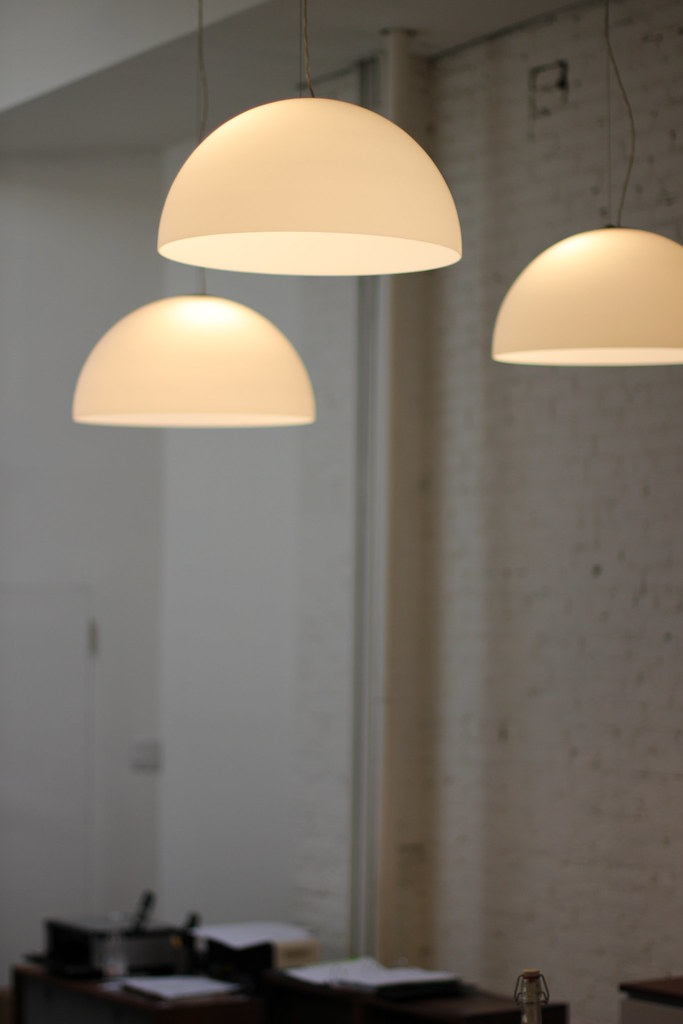


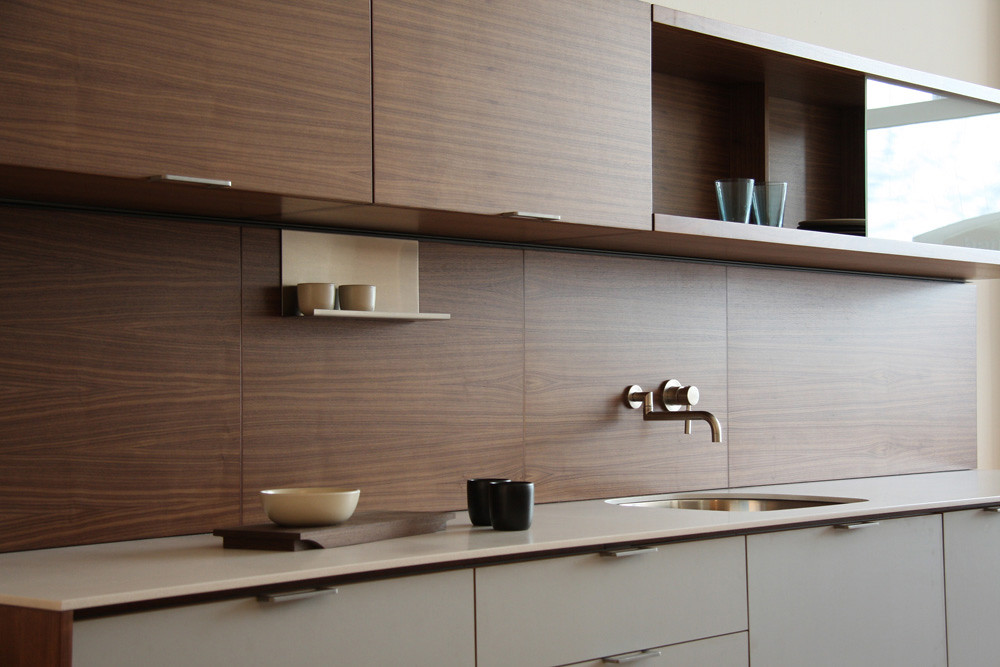
above photos of Henrybuilt's SOHO showroom, by David John.


Henrybuilt began in 2001 out of a shed in Vashon Island. 11 years later, Scott Hudson, Founder and CEO of Henrybuilt, which is based in Seattle with showrooms in Seattle and New York, continues to produce kitchen and home storage systems, as well as hand-built furniture that "feels natural and from the hands." Hudson, the founder of Henrybuilt, created Viola Park, in the last few years during the economic downturn, as a way to reach a new client. Viola Park's clients use software to design their own cabinet systems, bringing prices down, and allowing Hudson's vision to reach a new audience. The company’s current design tool is the beginning of what is becoming a more sophisticated online design system.

Innovation + Craft


When the Henrybuilt office contacted me last year, I was delighted to talk with Scott Hudson about his past, his dedication to working with his hands, and his ability to steer his company into profit when so many companies in the design community have collapsed in the last few years. (no easy task.) On a recent trip to New York, I was able to stop into their Soho showroom on Grand Street, where I was able to touch, and use the Henrybuilt systems. There is indeed a warmth, a feeling of ease, a slowness and authenticity in his work that is immediately apparent upon touch. A feeling of timelessness, and classic "Modern American" craft.

Thanks Scott and Lisa. -David John


Henry Spurgeon Hudson, your grandfather built his homes out of stones gathered from his own property. Tell me about your grandfather, and your relationship to him, and "to making things."

Scott Hudson: My grandfather wanted to become an architect, but his dreams were sidetracked by the depression. He was the only son in a long line of farmers. Although he had to pass up the chance to go to school for architecture at North Carolina State in 1932, he did inherit a 200 acre farm. And on that farm he made a life that turned out to have many blessings he may never have experienced if his life had gone a different way. Perhaps chief among them was the fact that he and his wife became sort of virtuosos of their physical environments. Not artistically, but functionally – and a kind of beauty came out of that. They learned how to make the home they lived in, the food they ate, much of what they wore, and even some of their own tools (my great-grandfather was a blacksmith).

We are distanced from this kind of relationship with our physical environment now as a culture but there is incredible power and grace in the ability to make a life this way – and inspiration.

I worked with my grandfather during the summers starting when I was 12 years old. We ran fence, hauled hay, built stone foundations ( I mostly carried hod ), framed buildings, milled wood salvaged from old barns, and built cabinets for the school district. I loved physical work, but I was mostly just trying to keep up when it came to making things. Only when I left home did I really start making anything of significance on my own.


Henrybuilt is: "Highly refined but approachable- and optimized for use. No novelty. Simple and distilled."

Have you always been interested in refined work, or has it taken you years to distill your work to its fundamental forms and materials?


Scott Hudson: My mother collected Shaker furniture. And my whole family’s farm-based aesthetic was based on function. That’s not to say my grandfather’s work was ‘beautiful’ in a traditional design sense. It was pretty plain. He had a little different orientation to what he was doing than I do. He never would have fussed so much over the ‘beauty’ part. For me, when a thing is distilled in its form, it takes on a dignity that can be out of proportion – in a good and surprising way – with what you would expect a physical object to be able to represent. That is why I am doing this. Because when you achieve that you’ve really done something for someone. But it’s a process. You just have to keep working on it. It took me 20 years of building and designing things before I felt like I could make anything really worth building a business around. So I am slow.
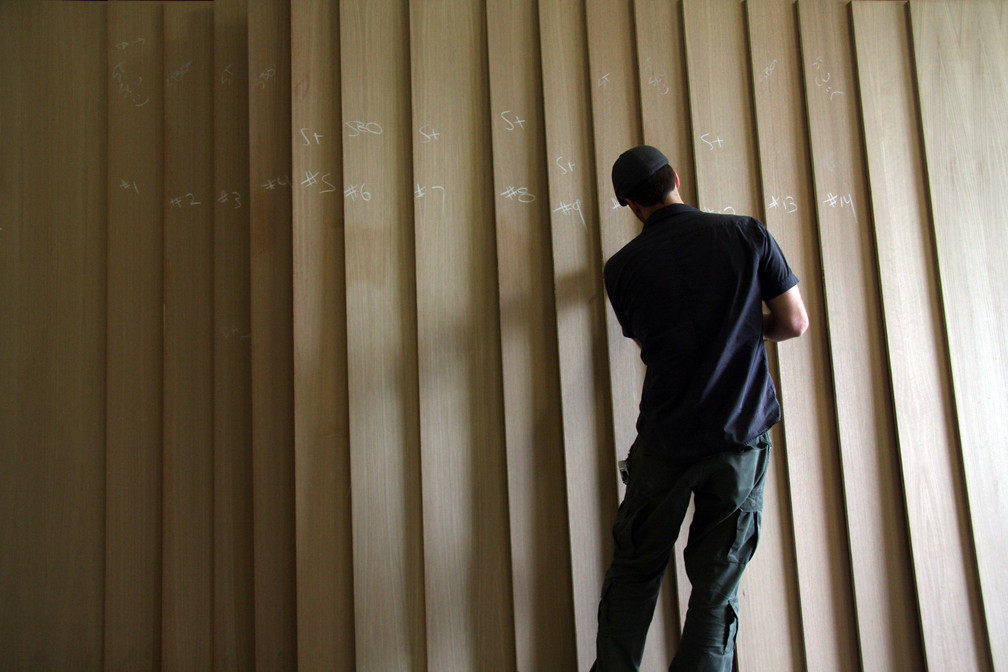


the veneers being labeled and sequenced


How important is "material selection" to you, and what materials do you find yourself attracted to, and why? Favorite materials to work with? Materials that challenge you to no end?

Material selection is very important. Every material has a character. Some better than others for certain things. Most people’s tendency is to isolate materials, though. Really they are only good or bad based on what they are combined with and what they are doing. All good designers and builders know this. But getting this across to others – others who are your clients – can be very challenging. Its not easy to project what a combination of materials will feel like, and its very easy to be seduced by a small piece of stone or wood that in large doses will be all wrong.

My favorite materials ‘wear no makeup’ and don’t show off. They sit quietly, somewhat in the background and look beautiful when you notice them. The best fashion designers understand this – and the subtleties of combining material better than anyone.


Henrybuilt chairs prior to being varnished.


Were you formally trained as a craftsmen?

The only formal training I have as a craftsman was 6 weeks in a welding program that enabled me to work in the oil fields – something I had really wanted to do - during a period when I dropped out college. And to be perfectly clear about this, it is not my craftsmanship that sets the standard for Henrybuilt. It is the work of many other much more talented craftspeople who make up the team at Henrybuilt.


You began Henrybuilt out of a shed in Vashon Island. How quickly did the company grow, and how has your work changed over the 10 years?

The company grew much more quickly than I expected. It doubled in size for the first several years. Recently with the housing downturn, we have grown much more slowly, but we have been fortunate to keep growing and expanding into new areas and new products even through the downturn. We seem to be entering another period of rapid growth now.

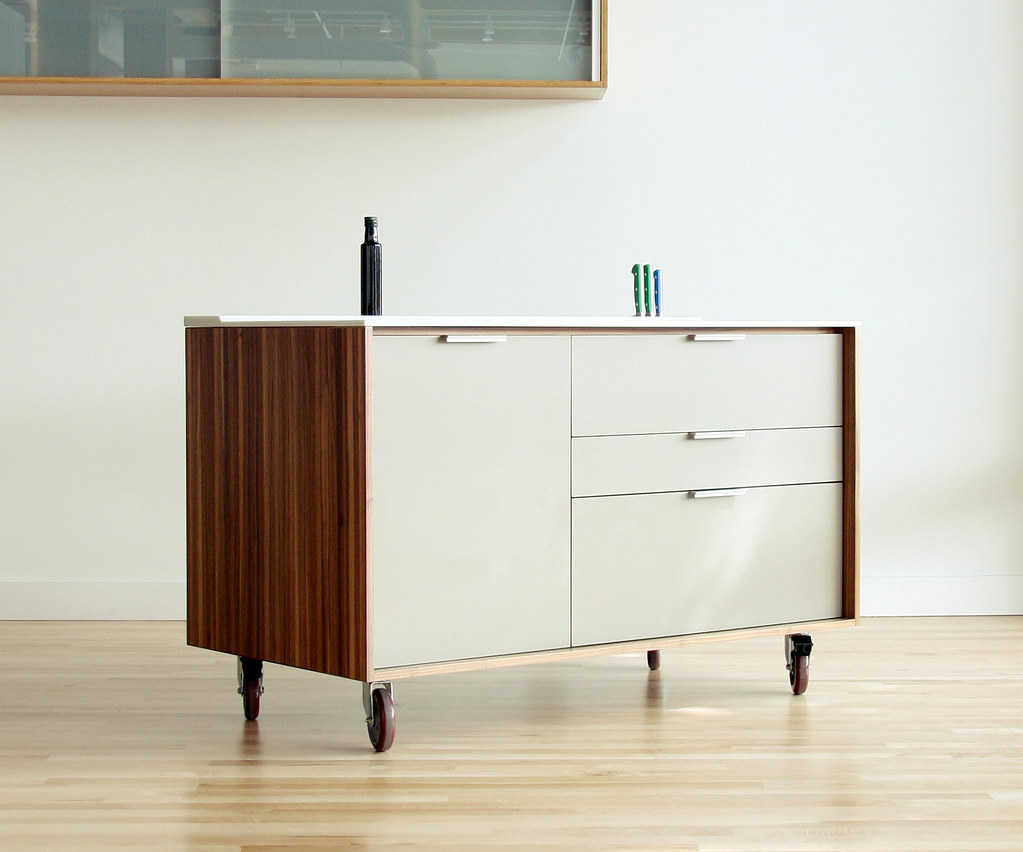
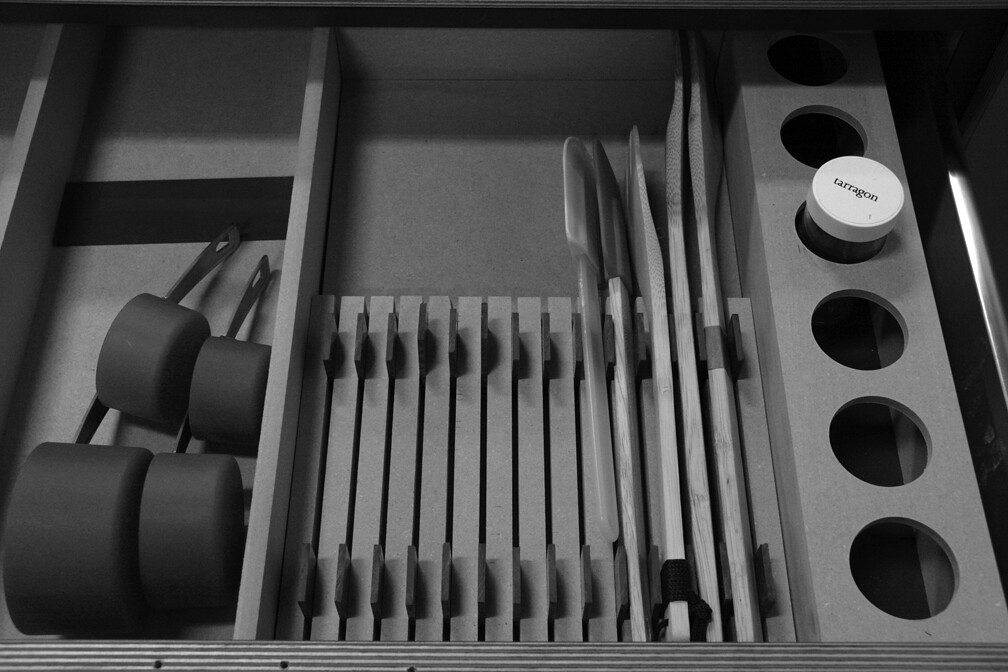
Our work has become more precise, and more complete over the years. The primary focus of our business is the development of systems, like our kitchen system, that combine a very high level of craft with a holistic approach to design. So we are less and less focused on parts, and more and more focused on how assembly’s of parts come together. The concept of approaching a kitchen as a ‘system’ is not ours. It originates in Europe, and company’s like Bulthaup have taken it to a high level. But the combination of this approach with the particular feel we create, and the level of customization – is unique. The objective of creating the ultimate combination of system, customization and craft is what drives our design effort. We believe this system approach is the future of the market and the future of the way people approach the design and building of the best kitchens – and perhaps other areas of the home as well.


Are your kitchens and furniture work following any specific aesthetic design history? Can you step back and see your influences?

We share influences with a lot of modern designers: the Scandinavians, the Japanese, the Shakers, the mid-century modern masters. But we are focused on something our own too that is very American that is difficult to describe. We are trying to achieve the beauty of something that fulfills a large part of its value by being a tool, without losing the feeling that you want to cozy up to it.

One of my goals is to always make things that feel natural and from the hands of the people who are designing and making them. Its always interesting to hear what the guys in the shop think of something as its being designed. The link between designing and making is tight. We try to keep this built into the design and prototyping process. It’s a collaborative effort. And that produces a more honest product. If we were just a designer, or just a manufacturer, the quality of the design that we produce would be different.


There are moments of "color" in your Viola Park line, how do you think about color?


Color is not my first instinct. The credit for the color in the Viola Park line really goes to Virginie Remy, one of the key members of the Henrybuilt design team who worked with me on the development of the line. I wanted to use color in our own version of the way the Shakers did, but she brought it to life and made it Viola Park. The work of Henrybuilt – and Viola Park - is a result of the effort of a lot of people, designers and makers, coming together. And often that includes coming together with our clients, with them as part of the design team.


"Modern American." Do you think this phrase captures Henrybuilt?


It’s an honorable phrase and a worthwhile goal.


Roy McMakin, I can't help to think of his work when I see Henrybuilt. Both of you I feel continue the discussion of minimalism, spare use of color, and a strong study of form, and line.


Roy McMakin’s work is remarkable. It’s flattering for you to find a similarity. He is someone who clearly understands that an object can have powers that transcend what people expect of it – and knows how to create that quality of work – and is willing to do what it takes to make that happen, which is not easy.


Henrybuilt here, and visit Viola Park here.

Follow Henrybuilt tumbler


--------------------
a conversation with Bec Brittain

...
"The growth of crystals in entirely compelling to me – growth in a non-living thing is absolutely amazing! Moreover, it's fascinating the way each mineral has its specific growth structure which is consistent, yet depending on environmental variables each specimen is unique. "

- Bec Brittain


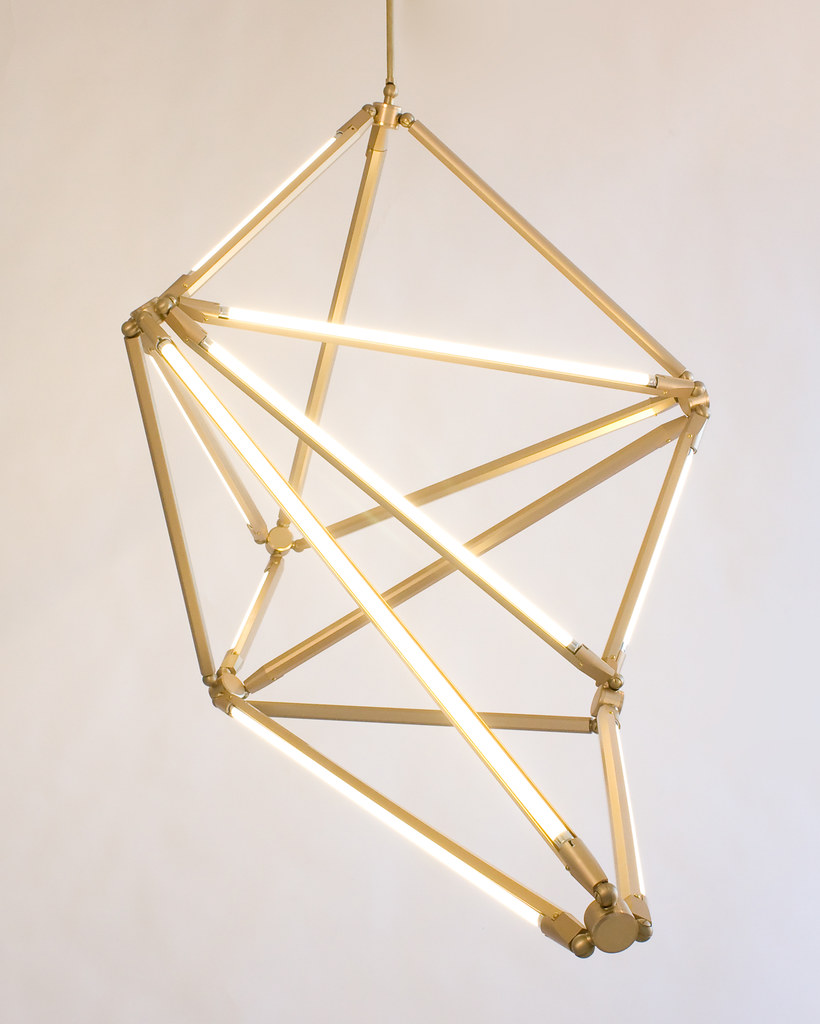
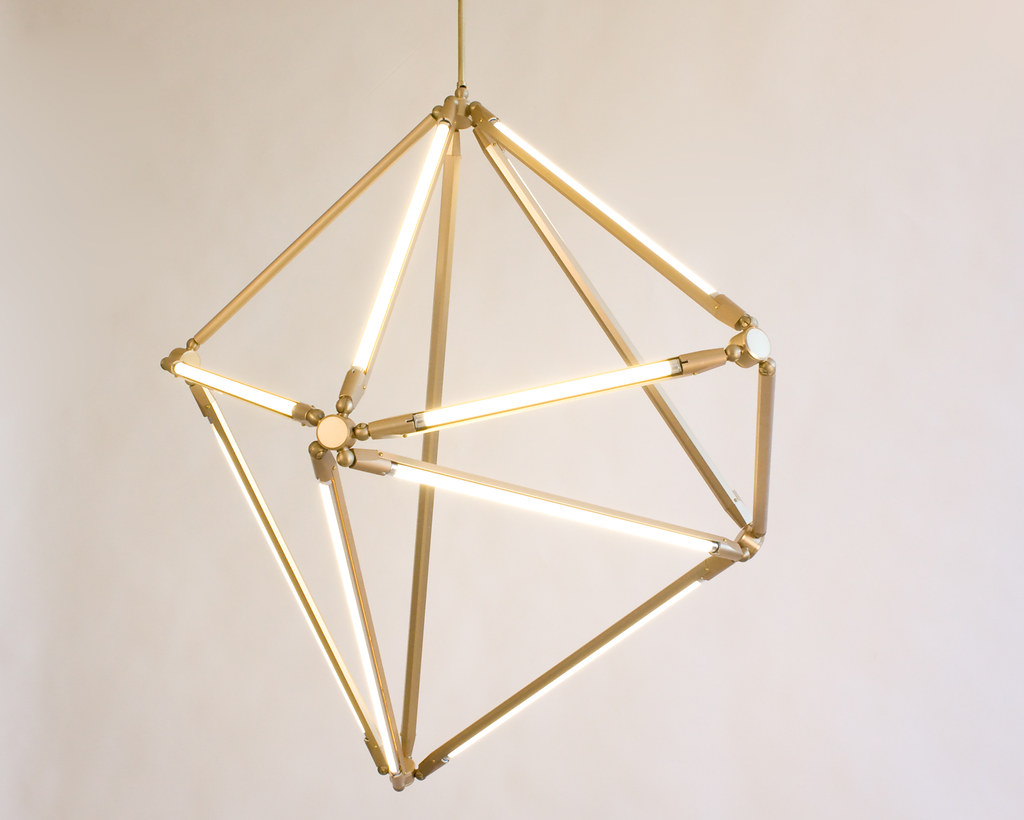
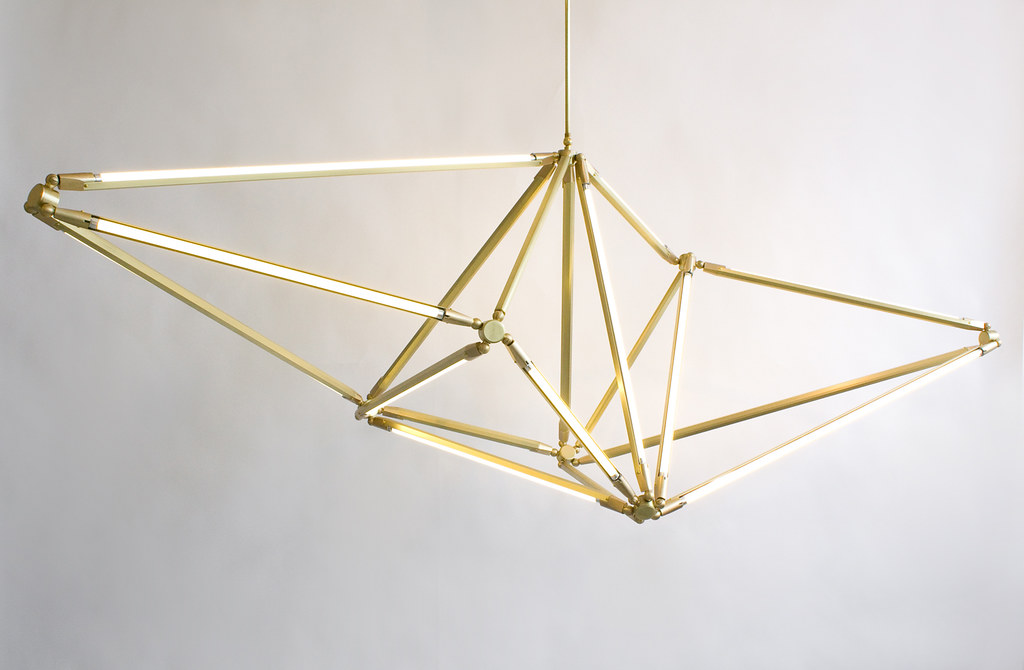
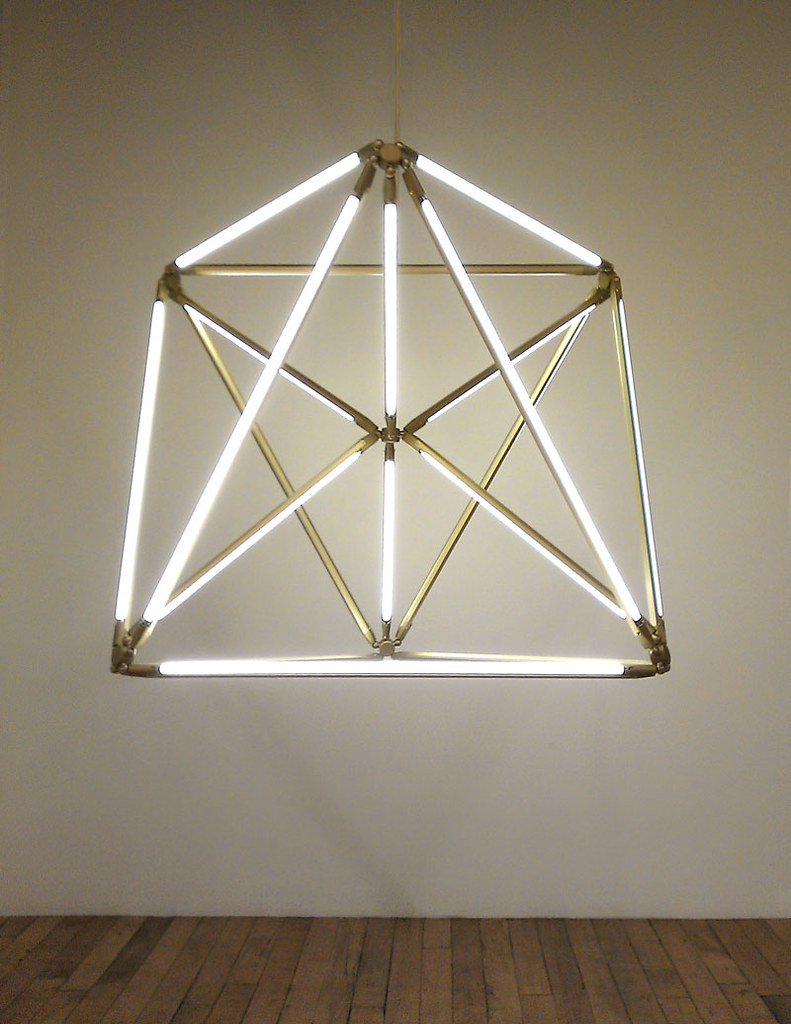
Bec Brittain's "the SHY Polyhedron light "


Bec Brittain's latest sculptural lighting work "the SHY Polyhedron light " will be part of MAISON- OBJECT in Paris at American Design in Paris, presented by Triode Design, opening this week, January 22nd. For those in Paris for Maison, visit this collection of American Designers, pushing design + objects into the future.

When in conversation with Bec Brittain about her latest work, she told me that "the Polyhedron brings a few ideas to the SHY light system that I hadn't played with before. The lights begin as a burst in the center, as opposed to only forming the perimeter, a burst of brightness." The more I stare into her works, the more I get lost in their subtle, shape-shifting geometry. Pulsating light lines, bringing to mind Fred Sanback's yarn works, Brittain's pieces are elegant-light drawings in the sky, collecting the energy of the room, full of purpose and intent.

Bec Brittain is currently working on an as yet unnamed piece (in-house it's called mirror crystal), which utilizes a 2-way mirror. "It's a polyhedron, which when the lights are off it reflects it's surroundings, but once you turn it on there is an infinity affect and you can see through to the many dots of light." This piece will be debuting that at the Architectural Digest Home Show in New York, March 22-25.

- David John


How did you become interested in LED?


"The quality of light", and why your attraction to working in this source? The interest was actually first with fluorescent light; I became really taken by the idea that we were surrounded by these beautiful white lines, yet they had been relegated to the most banal and industrial applications. I wanted to break them out of that role. After much research, and an initial fluorescent prototype, their technical limitations made themselves quite clear; the LEDs are so nice to work with by comparison – the wiring isn't so complicated.

Right now is such a curious time for lighting technology, there are so many concerns: energy efficiency, quality of light, longevity of design, and many times they are in conflict. My first priority is to try to design things that can be passed on to grandchildren, which requires trying to design for future change. My current solution is to always make sure you can change the light bulb; I hope that this allows not only for burnt-out bulbs to be replaced, but also outdated light bulbs to be updated. A lot of LED lights don't allow for it, and I think in 20 years we're going to have a bunch of light fixtures in the trash. As for light quality, I think it's going to be really interesting how things move forward. LED technology is improving daily in terms of its quality of light. But I also think there's a real possibility of our eyes and our tastes adapting to new kinds of light.

I wonder to myself if we're all going to begin to like different colors because of how they appear under new light....


Why do you call it the Shy Light?

My grandmother is a complete inspiration – she has always had a great eye, and continues to do so past 90. She helped brainstorm about the piece, so I thought it only right to give it her initials, SHY, for Sarah Hitchcock Yerkes.


How did the idea for the LED lamps come about? Can you talk about your process, how you are able to conceptualize, all the way to production?


The SHY light was a nice confluence of the long tubular bulbs lending themselves to make these faceted forms which had been stirring around in my head for a while. For any design there are any number of tools I use, and I just try to find the quickest one for the task at hand. I made a ton of sketch models, using tubes and wire and plasticine, to test the overall shape. The first prototype was made with as many ready-made parts as possible, machining just one custom piece. I have continued to improve it in iterations, refining and making new hardware bit by bit. I suppose I'm a bit impatient and need to see the thing in front of me as soon as I can; I certainly prefer improving iterations of something to trying to get it perfect in the computer before doing anything. You can learn so much in the in-between steps.


Is there are connection between your work and Lindsey Adelman's work? How has she influenced your work, and what has it been like working with her?


It's so hard to say how mine and Lindsey's work are connected; I'm so close to both things, I'm not sure I have the best perspective on the final products and their relationship. What is much clearer to me is the process. When I began working with Lindsey I was trying to decide where to put my focus; I have always been connected to the making of things, but I just hadn't found the right fit in terms of how to try and make a living at it.


The 2 most important things I learned from Lindsey Adelman are:

1. You can be a product designer and not make mass-produced items. Instead you make relatively few pieces, mostly by hand, and they will be appreciated by the client.

2. Relax about something being perfect the first time out.

She continues to change and improve her pieces as certain issues pop up. There's a nice balance between making it the best you can at the time and understanding that you can always make it better. My description of how I made the SHY light in iterations is definitely influenced by this attitude.


You were the Lead Designer at architecture firm WORK AC, and then shifted focus to design luxury door hardware for manufacturer H. Theophile. Currently, you are Design Director at Lindsey Adelman Studio while also building your own practice in product design.

Why have you shifted from architecture to product design?


I began studying product design at Parson's in undergrad, and it was ultimately completely unsatisfying. At the time there was such a focus on mass production and saving resources in the production of the piece (flat-packing to save warehouse space, etc.), but there was no focus placed on the idea that something that will last 150 years will be more environmentally and economically sound than the 20 throw-away tables that you could have instead. I felt very outside what I understood to be the product design world. I left that program, and received a philosophy degree before getting the architecture degree; I used both of those degrees to try to solve this issue I had of wanting to make things but not feeling right about putting more stuff into the world. I tried a bit of architecture, a little furniture design, and some hardware. I think it was partly growing up and having more experience, as well as seeing some other product design practices that I admired, which threw me back into what I had wanted to do when I was 18. I also discovered I really like metal.


3 things we might never guess about you?

Don't we all need a bit of mystery? (yes!)


You speak of a more gradual appreciation of a larger idea. What larger ideas is your work moving towards?


The larger idea is specific to each piece. In the case of SHY, my interest in crystalline structures is really at the heart of it. The growth of crystals in entirely compelling to me – growth in a non-living thing is absolutely amazing! Moreover, it's fascinating the way each mineral has its specific growth structure which is consistent, yet depending on environmental variables each specimen is unique. SHY is constructed similarly, in that the hardware sets certain structural rules, yet it can be put together in a number of different ways.


Bec Brittain
was born in Washington, DC in 1980, Bec Brittain studied industrial design at Parsons, earned a BA in philosophy from New York University, followed by an architecture degree from The Architectural Association in London.

Brittain's work experience has been similarly varied as her education. She was Lead Designer at architecture firm WORK AC then shifted focus to design luxury door hardware for manufacturer H. Theophile. Currently, she is Design Director at Lindsey Adelman Studio while also building her own practice in product design.


Bec Brittain's work is at MATTER in New York.....and TWENTIETH in Los Angeles.


-------------

YHBHS interview with Jonathan Hale Nesci

...
"Design to me is like soup. My soup might have carrots in it and yours might as well, but yours will never have the same combination of ingredients because they are being made from a different combination of perspectives and experiences."

- Jonathan Nesci


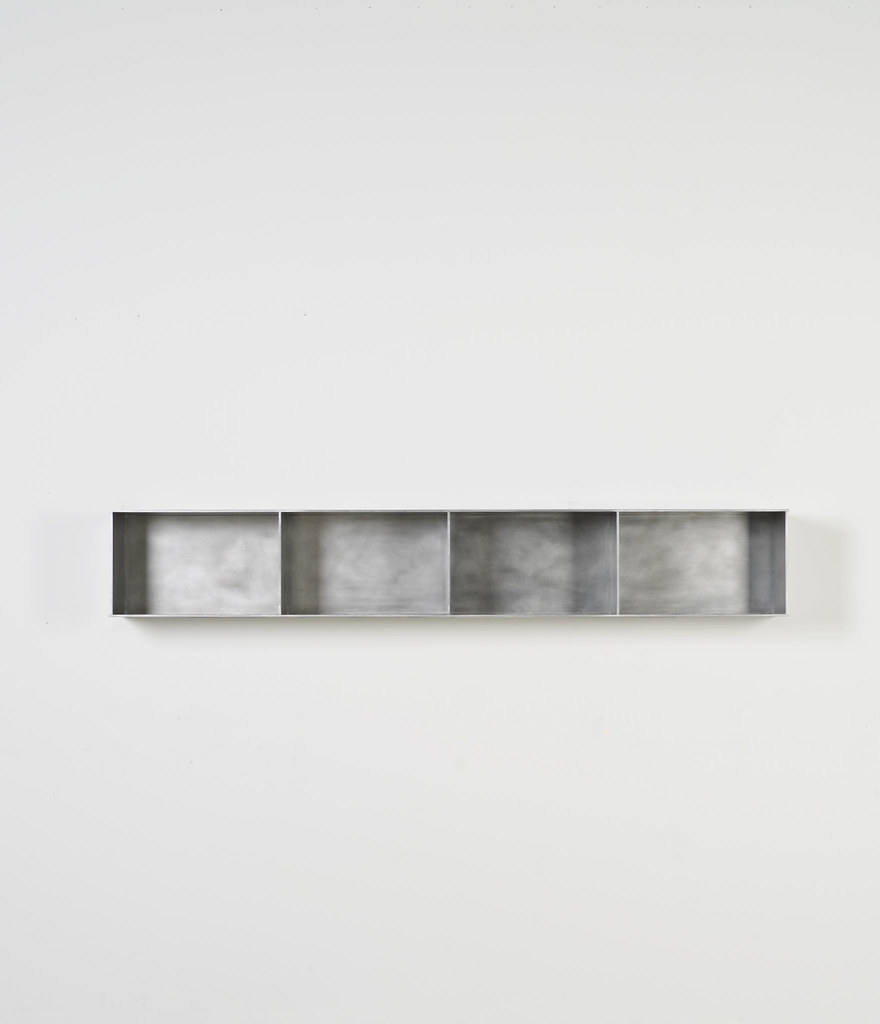
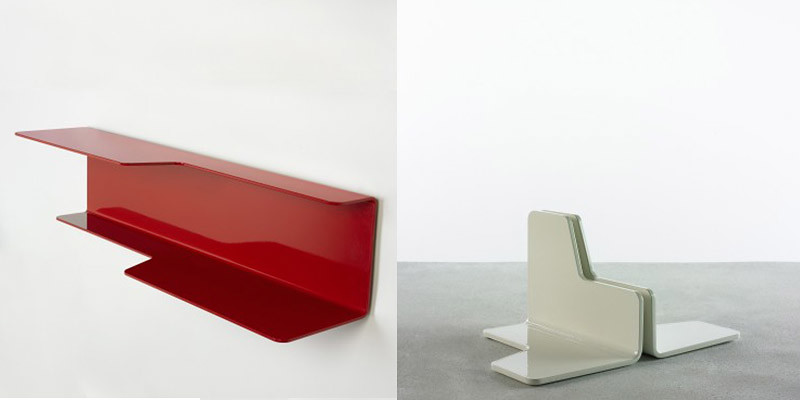
top image: 4G shelf, waxed and polished water-jet cut 1/4" aluminum plate
bottom images, l to r: Tidal Shelf and Prop Bookends


min·i·mal: barely adequate or the least possible

It was a few years ago that I first saw Jonathan Nesci's minimal works. Sometimes it can take me years to come to grips with a form, a specific color, or a shadow. Have you ever been haunted by a form: fallen madly & deeply in love with its curves or straight edges, only to see it suddenly reappear everywhere? All of a sudden, the fire hydrant's red cylinders, or the lines of the fire escape seem alive and brighter!

Over the past years, I've questioned and considered my attraction towards minimal forms (architecture, design, art). When one reduces color and form to its essence, what exactly is to be gained? In a conversation with Jonathan, I asked him about the word minimal, and he simply stated, "I have no feelings about the word itself other than there is nothing simple about making something that looks simple." And perhaps it is that difficulty that keeps me interested. In Nesci's designs, there is a subtle complexity, a puzzle if you will, that comes to life.

Thanks Jonathan for having this conversation with me about your work.... - David John


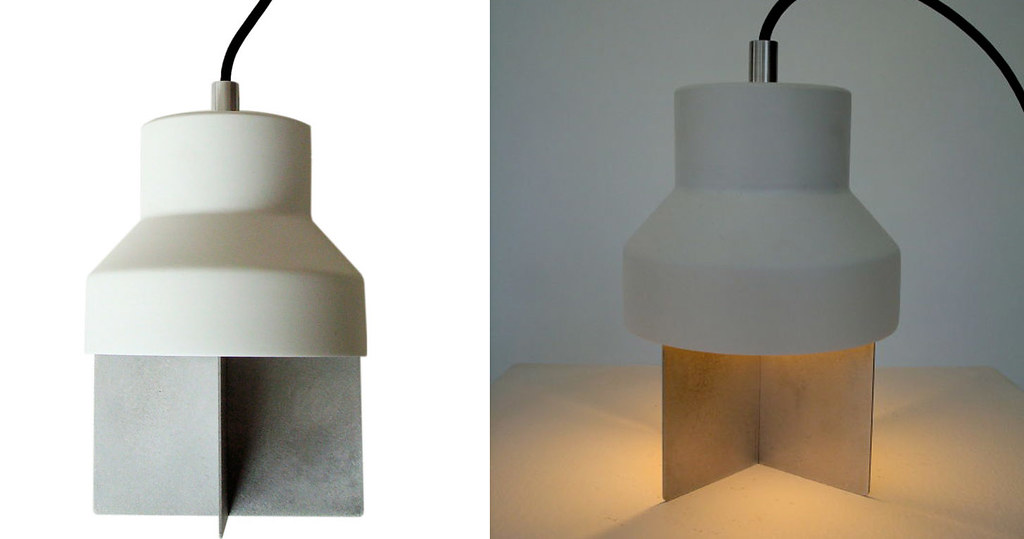
Pendant light of powder-coated spun steel, aluminum, magnets from an edition of 20 + 2 AP. Volume Gallery Edition. Edition is sold out. This is number 8. (via Pavillon Antiques)


Design philosophy? I am fascinated with order and systems that are formed from teams of creative thinking. We are surrounded by objects and systems that are made by man that are formed out of want or need. I am in awe of how mankind works together to get something done. I love urban areas because of this; I find myself deep in thought on how and why it all came to be realized. People had to design the roads you drive on, the bridges you cross and the coffee cup that you drink out of. Sometimes their designs work and sometimes they don’t, I like finding the answers to the questions of how and why the most. I am passionately discovering the history of how things came to be and working to add my own flavor to mix. My work is a compilation of all the things that I am personally experiencing.

Design to me is like soup. My soup might have carrots in it and yours might as well, but yours will never have the same combination of ingredients because they are being made from a different combination of perspectives and experiences.


Materials you are attracted to? What is the relationship between the fabricators and yourself? I appreciate the variety of ways to connect materials in general. I like discovering different ways of uniting objects and seem to understand this best with metal. A lot of my work ends up being mono-forms because of this idea of seamless uniting until visually the parts become a whole.

Because of low quantity orders and continuous prototyping, I am at the fabricator's mercy for pricing and lead times. There are talented people out there who take small orders and I do my best to find them and stay on their good side. I’m always asking questions to fully understand their process and design around their capabilities. I’ve tried welding, grinding, machining myself and have come to realize I will never do as good of job than someone who does it every day. I love the variety of things that can be done in a industrial process without me being there while it is being made, it frees me up to work on new designs with other processes simultaneously.


You were restoration manager for WRIGHT AUCTIONS, can you talk about this experience and the effect it has had upon your work?
The most unforgettable object you worked with there? I benefited from five years of solving design problems and soaking in important historical design. Prior to this I had a 3D CAD certification with a limited knowledge of design history. While I was at Wright I was exposed to a variety of craftsmen who were experts in processes with all different types of materials. It was a great opportunity to develop relationships with many talented people and get 10,000 hours of precious design and fabrication practice. Richard Wright and his late-wife Julie were monumental in training and supporting my work and I am very grateful for the chance they took in me.

There were so many unbelievable pieces at Wright. I feel like every piece I touched had some type of impact on my vocabulary of scale, connections, and materials. If I had to choose one it would be Scott Burton's Hectapod table, I absolutely love that piece.


Any periods in historical time, or specific designers that you are attracted to? I'm really drawn to artists who work with design sensibilities such as Burton, Brancusi, Noguchi, Albers, Judd, Tony Smith, Max Bill etc.. Most of them worked with craftsmen to fabricate their work and I like this idea of working with others to carry out your ideas.


In a very short time you have been not only able to design quite a large portfolio of works, but also be awarded and recognized. Any advice for the young designer? Make your ideas into physical objects even if they are only full-scale mock-ups. The ideas can't stay in a gestation state in your notebook. They need to be born, from there they can be refined.


The Secretary
, via MATTER, NY leather, aluminum, steel.


Can you talk about your process from start to finish for a piece such as The Secretary for MATTER? The process for Matter was faster than I normally work. The Secretary went from a conversation in Indiana to a physical piece in New York in about 50 days.

Technically speaking, this piece started as a rough sketch and was quickly brought in 3D CAD to work its assembly. It then had to be deconstructed from a 3D drawing back to a 2D file to water-jet cut the aluminum. Once I had a cut file I did multiple full-scale mock-ups in 1/4" thick Luan sheet to refine the form. From there I made corrections to the cut file and started the fabrication process.


Artists & designers such as Tony Smith, Donald Judd, Sol Lewitt appear to inform your work. What is the building block you hope to add to this conversation surrounding minimal design?
I am most interested in how my ideas relate to the industrial process; I’m not sure how this adds to minimal design specifically. I'm constantly experimenting so I really never know where it'll all end up. I'd like to have a design that sells really well one day so I can advance my research in what else can be done. I really love this aspect of design thinking that you really don’t know what great answer to your problem that tomorrow will bring.


3 things I had no idea about Jonathan Nesci?


I'm continually changing my mind. This makes personal and business relationships very interesting. Nothing says “this guy is crazy” more than having a idea you feel great about one day change completely overnight. This is how I work out problems though; I have to see it physically to see if it’s working.

I'm itching to have large scale sculpture produced. Design should work; whether it works as a chair or works as a sculpture doesn’t really matter to me. I would love the opportunity to make a sculpture that works as a sculpture.

I have no idea what I'm doing, but I learn a little bit everyday of what I don't want to do and try to do less of that. I like what my friend told me: “Just keep swimming and try not to breath in too much water." This seems to sum up a lot of what I’m trying to do. It’s an experimental journey to me.


Future Exhibtions? I have a solo show in November with Patrick Parrish’s gallery MONDO CANE. He has an great space in Tribeca and I love the design history roots that the gallery has.


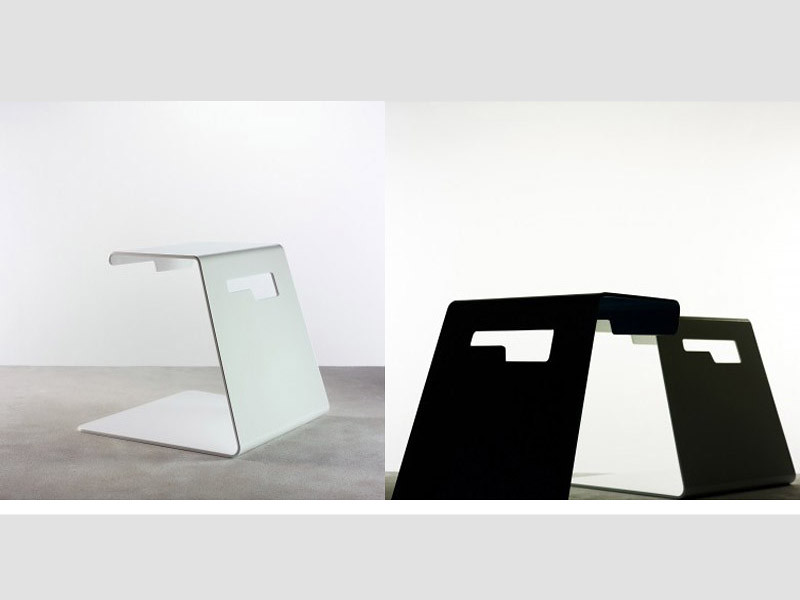
jack stool

HALE, an industrial design company founded by Jonathan Nesci in 2006, is a part-design, part-production firm based dually in Chicago, IL and Scottsburg, IN.

HALE uses a direct, intimate approach in securing quality, detailed, decorative art and fine furniture products from craftsmen in fields beyond the furnishing markets. In many cases, the designs are formed around industry capabilities and employ experts in a variety of manufacturing and production processes.