
"I find the metaphors of the machine that Modernism embodies, along with the geometric abstraction of formal composition, to be alienating and sometimes even disorienting, as opposed to a more classical approach that considers metaphors of man and the landscape and a more figurative formal tradition." - Michael Graves
All artists should simply use the materials that are appropriate to their ends. It’s a false issue to say this is ‘industrial’ and this is ‘art’ material" - Carl Andre.
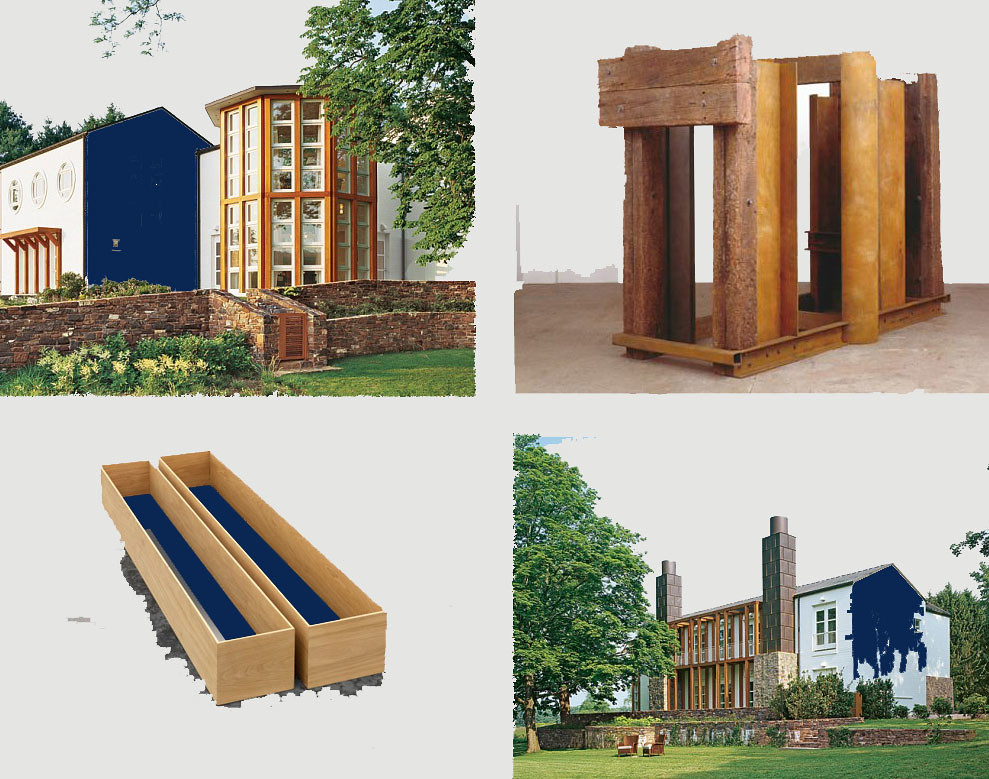
Ah Michael Graves' residential projects make my mind do flips & circles. From early to late, there is something about his work that breaks so many rules, but often times, quietly. I've been staring at these images for a long time now, pinned onto a cork board. Today, they aligned themselves into a coherent thought (that is still up for debate). Here's to patience! Here's to sculpture! Here's to houses that look like sculpture! - David John
"My father’s family were bricklayers and carpenters and shipbuilders, and so my earliest experiences are not of art, but of the materials and those are the materials that I continue to use. I never did anything that required the art supply store as I’ve always used industrial materials.
All artists should simply use the materials that are appropriate to their ends. It’s a false issue to say this is ‘industrial’ and this is ‘art’ material"
- Carl Andre.
the minimalists' nightmare
vs
the postmodernist's painter delight
images: top left, clockwise. (all images have been altered, perhaps ruined.)
1. Michael Graves, AD (altered)
2. Carl Andre, wall painted behind. altered
3. Becky Beasely. liquid turned blue. altered
4. Michael Graves, AD altered
I would have to say that my architecture evolved in part as a reaction to aspects of Modernism. I find the metaphors of the machine that Modernism embodies, along with the geometric abstraction of formal composition, to be alienating and sometimes even disorienting, as opposed to a more classical approach that considers metaphors of man and the landscape and a more figurative formal tradition. That is not to say that my work is historicist or classical stylistically, which is part of what the Post-Modern movement argued. I don’t think of myself as a Post-Modernist. The Modernists tried to wipe the slate clean and the Post-Modernists tried to look back to formal motifs recognized from historical architecture. Instead, I think that modern composition is part of a cultural continuum that goes back thousands of years and therefore I tend to see both Modernism and the traditional language of architecture as part of the palette we use to compose our buildings. -
Michael Graves, please read interview here...
------------

