Showing posts with label interior photography. Show all posts

a conversation with Brian Ferry

.
It's about memory and aesthetics and environment.
I guess this is why I am a photographer -

it's easier for me to show you, not to tell you.
- Brian Ferry


"Gotta find a way to get home strong, Gotta find a way back home
Gotta find the light to guide me along, Gotta find a a way back home
Gotta find a road that brings me back slow, Gotta find a way back home."
- Mojave 3, Bluebird of Happiness


I slowly became aware of Brian Ferry's photographs through his site, "the blue hour." His work captivated me for many reasons, one of them being the stillness he is able to capture on film. A certain moment of silence in the world, a moment that you might be lucky to catch if you are in a mindful state. His book, Quality of Life, he stated was "a desire to document the small and often seemingly unexceptional moments of day to day life, capturing these quietly beautiful details and making visual diary entries, allowing us to dwell on them with him." His photography has also been featured on Freunde von Freunden & Kinfolk magazine. Over the past year, Brian Ferry has transitioned from practicing law full-time to photography, working with various clients as Starbucks, and Rugby (Ralph Lauren).

On April 21 at St&ndard Goods, 7151 Beverly Blvd in Los Angeles, Brian will be in town for the opening of his photography show, entitled "This Is What Was Once All Yours," a collection of photos taken in the UK. It's now 6:45 a.m. here in Los Angeles as I am writing. The light is wrestling with the last touch of night, and it is now becoming time for "work." - David John
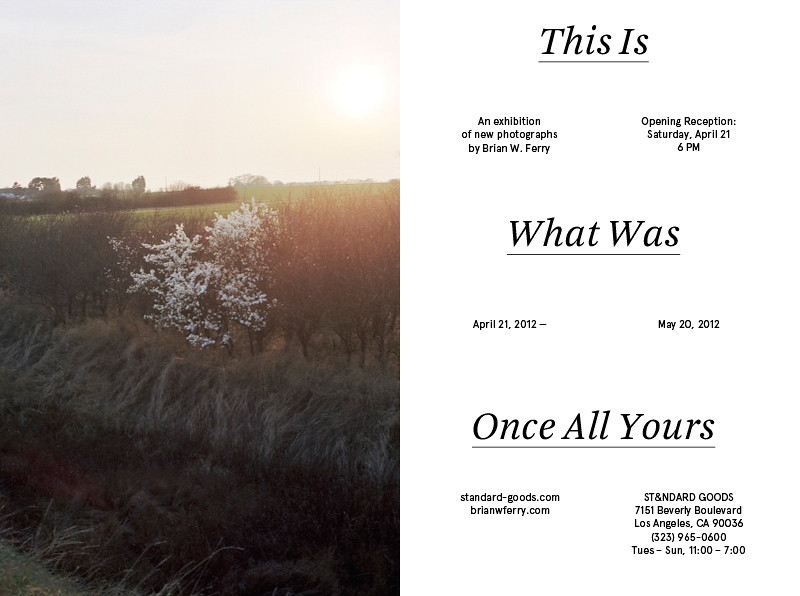


"This Is What Was Once All Yours."
Where did this phrase come from?

Brian Ferry: "This Is What Was Once All Yours" is a line from a short story by Justin Taylor, included in his book "Everything here is the best thing ever." I read it a few months ago and wrote it down - I think it's such a loaded phrase. The line stuck with me and as I was thinking about the concept for this show, I saw my note and it immediately gave me an idea. Something about the phrase implies an active loss, rather than a passive one - where you have actively given something up. It also implies a sense of access and possession, but in the past tense. The photos for this show were all shot in the UK, where I lived from November 2009 to November 2011. I chose to move back to the US for a variety of reasons; it wasn't an easy decision and I've missed many things about my life in London since returning home. London felt like a city that really suited me in many ways. I returned for a 10-day visit in early March 2012 and I wanted to explore the idea of giving up my life in the UK - and what I had left behind. I knew that it would be interesting to return to England only a short time after moving back to the US. My hope was to capture some of the things that I left in the UK - not necessarily specific things (like my old flat or a favorite coffee shop) but more abstract, emotionally-charged stuff. There is a sense of nostalgia, perhaps - but I think it's more than that. I returned to England with a very different state of mind than when I left. It was important to allow myself to feel that change and hopefully let the change show in the photos I took. I wanted the work to explore change & transition and the mixed feelings that can accompany that.


Will you expand on the "more abstract, emotionally-charged stuff."

I wanted to capture something about the UK that is difficult to put into words for me - those subtle things that feel distinctive to me. It's about memory and aesthetics and environment. I guess this is why I am a photographer - it's easier for me to show you, not to tell you - I want to share a small part of my experience with you visually.


In the history of photography, are you carrying on any sort of tradition?

I don't really see myself as carrying on a tradition in the history of photography - I'm still quite new to this, comparatively speaking! While my work is probably more similar to the work of certain photographers rather than others, I don't see my work as fitting into a specific category.

My influences are varied and there are many photographers who influence me. I like Joel Meyerowitz and the way he tells stories about places & people and captures the essence of a moment and a place. His use of light & color is really influential. I am also influenced by Uta Barth and her more abstract photos of everyday things. I really admire her use of light & shadow and the way she incorporates lines & forms into her photographs. William Eggleston is also a big influence, as he is for many current photographers. Personally, I am most inspired by Eggleston's ability to find the extraordinary in the ordinary; this is something I try to do with my own photos.

There are many other people who influence me on a daily basis - and they aren't often big-name photographers. I'm influenced by other artists, designers, chefs, the way people live, the rhythms of daily life, the things I see and feel around me. Recently, I'm most influenced by photographers who are currently working and combining fine art photography and some commercial work in interesting ways.
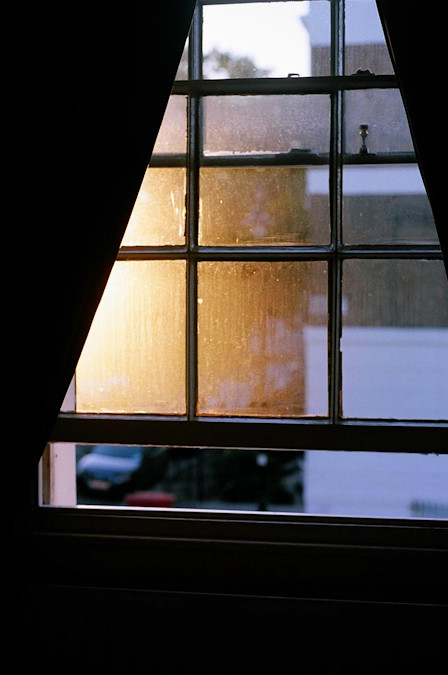


You recently made a career change from practicing law to being a full time photographer. Can you talk about this transition? Why was this change necessary?

I'm still in the midst of the transition, so perhaps I'll have wiser words in the future. I was a corporate lawyer whose passion was really photography - I shot photos every chance I had, it was a creative outlet that was absolutely necessary for my well-being. Over time, I came to understand that my heart was not in the job I had and I was unhappy. Nothing mattered more to me than pursuing photography full-time. Not the money I was giving up, or the stability (or the health insurance...). When you reach that point - when there is nothing that can hold you back from taking a leap of faith - then that leap seems less like a risk and more like a necessary and natural step forward. This is how it has been for me - I expected a rougher transition, but it has felt very natural. The life of a corporate lawyer and the life of a freelance photographer are, not surprisingly, very different. But photography was like my second job when I was practicing law. I was working on personal projects and small commissions quite often. It wasn't like I left my job and then decided to pick up a camera for the first time and try my hand at photography. So perhaps that's why the transition has felt natural - it is such a luxury to be able to devote myself fully to photography now.


Your photographs are documentations of...?

Experiences, the everyday, moods, moments, emotions, light.
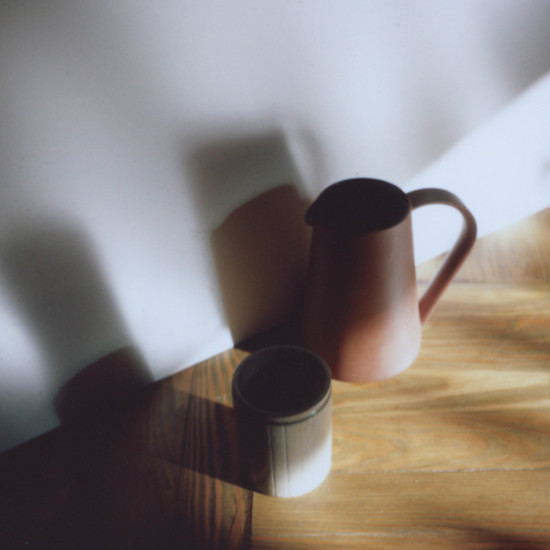


There is a sense of quiet, stillness, and an appreciation of shadows; a sense of darkness, of night approaching. What does it mean to capture something on film to you?

In a lot of my personal work up to this point, capturing these things on film means that I pause and reflect. I like to think of some of my photos as meditations. Usually, I'm going about my day and something stops me and causes me to pull out my camera. Maybe I've had a busy day and my mind is not really present, but in the evening I see this incredible pattern of light on the wall and it makes me feel something. I stop and try to capture that moment and that emotion. The emotion you may feel when you see my photo is different than what I felt, of course. But my intention is to make you do the same thing: stop, notice, think and feel something. Perhaps it's odd that a ray of light against my kitchen wall can stir some deeper feeling? It's the truth, though. Of course, often I see things that may not stir any emotion in me, but they still make me pause - a pattern, a shape or form, a color - and I snap a photo of that, too. It's about being mindful and truly seeing my environment and then translating that into my photographs.


How has the change from London to New York affected your work?


Well, a lot of my work is about observing my environment. And I'm less inspired by the city of New York than by the city of London. Some of this has to do with familiarity -- I've lived in NYC before and grew up in Connecticut. I have to look harder to find inspiration in my immediate surroundings here. Aesthetically, London was more inspiring to me and I felt I could simply walk around for the afternoon and never run out of things to shoot. Perhaps it's because London was always new and fresh to me - it was never too familiar. But I think this change is good for my work, it forces me to grow and learn and develop.


Your site, the blue hour, began? Has having an online site been instrumental in your career change?

'the blue hour' began in 2008 as a way to share my photography with friends & family and some online friends. It was my primary outlet for sharing my photography and to grow as an artist. Over time, it has attracted lots of people and I receive an incredible amount of support from people who follow the site.

My online site has been one of the most important factors in my photography and my career change. Taking photos and regularly posting them on my website kept me shooting, even when my job was insanely busy - and it helped me develop a body of personal work. Also, many photographic opportunities up to this point have come to me through my site, which is really incredible. For example, I had the opportunity to shoot an ad campaign for Starbucks in 2011 and their ad agency found me through my site. Such opportunities have given me confidence in my decision to change careers.

Why do you choose not to shoot digitally?

I will shoot digitally for commercial jobs and clients, or if it seems more appropriate for a certain photo. However, most of the time I shoot film. Part of it is the aesthetic - I like the way film looks, and digital photographs lack the depth & character of film. The tones and colors and the quality of light in a film photo can't be beat. I also like the process of shooting film - it's slower and more mindful, and it often involves less time on Photoshop after shooting! It's a refreshing process in our digital age.


Do you appreciate when photos are soft?

The level of softness or blur depends on the photo and what I am trying to capture. I do appreciate softness and a little grain in a photo - imperfections and quirks. This is one thing I love about shooting film and you will see that in my personal work. But there are other times when I really want a photo to be sharp and in focus. I tend to use certain cameras for those photos, like my Hasselblad - the lenses are meant to create crisp, beautiful images.


thank you Brian.

visit the blue hour.. ,
and Brian Ferry's portfolio


-------------------
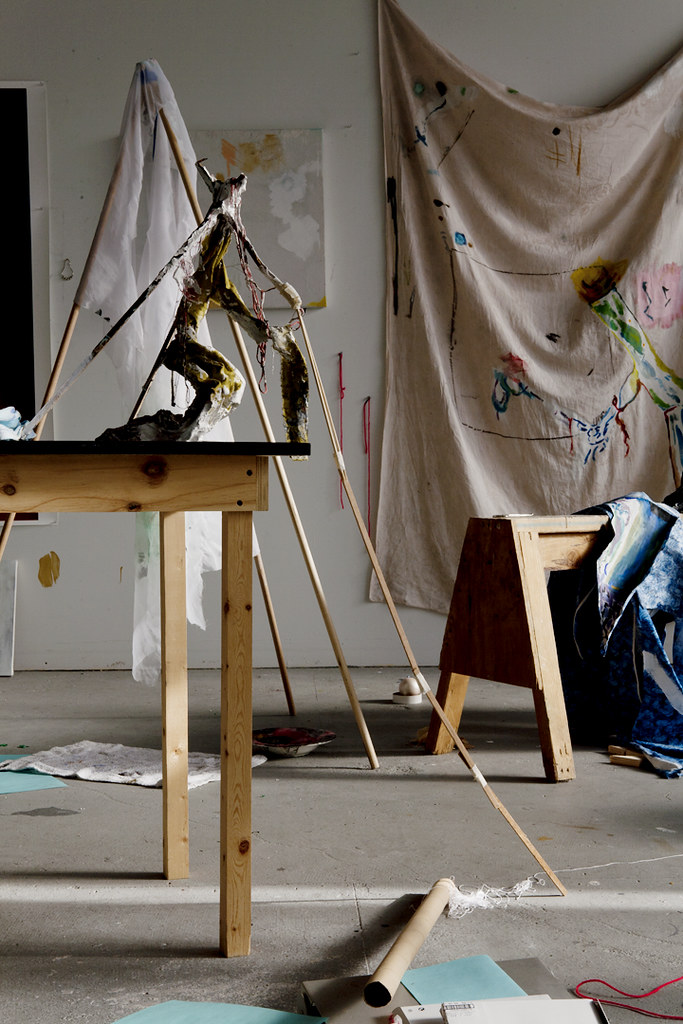
new work by David Gilbert
December 9 - January 22, 2012.


Klaus von Nichtssagend Gallery presents the first New York solo show by David Gilbert, a Los Angeles based artist. A few months ago, David Gilbert extended an invitation to view the work before it left for New York. On that early morning in downtown LA, I was transfixed by the light in his studio. We spent the afternoon talking about interiors (his mother is an interior designer), the power of arrangement/non-arrangement, faded colors and what they signify, and the works that would be included in the upcoming show. For those in New York, David Gilbert's show opens this weekend, with a reception on Friday evening. Take time to visit...


"David Gilbert's installations of photography and sculpture are an effort to pin down ephemeral forms, creating a dialogue between image and actuality. Gilbert’s studio practice begins by working with humble materials such as fabric, clothing, paper, cardboard, paint, and yarn. The resulting messy, fragile, and often whimsical assemblages are arranged within the studio environment as still-life compositions or theatrical vignettes.

With a nod to painters such as Ingres and Vermeer, and photographers Robert Mapplethorpe and Peter Hujar, these “portraits” generate a conceptual fetishization of their subjects. The work operates between abstraction and vérité, where the viewer recognizes the materials from which the sculptures are made, but the resulting forms are ambiguous, ghostly or crude figurations.


---------------

a conversation with Bethany Nauert

...
"I always knew I was an artist- it just took me 30 years to get it right. Though I was passionate about working in a creative field, I was not sure exactly how to achieve that goal"


Bethany Nauert is a Los Angeles based photographer that specializes in interior spaces + architecture + portraits. Over the course of the last two years, her career has exploded, and she has taken over photos of over 150+ homes for various publications. When I was doing research for a project last Spring, I kept noticing her name on many of the photographs I was looking at. She has photographed incredible homes + lofts, and some of my favorite Los Angeles showrooms: Obsolete, Lawson-Fenning, and Silver Lake's Mohawk General Store.

I called her up, and we eventually had a long conversation one afternoon over lunch about her career path and her quarter life crisis, and her love/hate relationship with the city that finally welcomed her years after she left.

Thank you Bethany... - David John


Were you always fascinated by design?

Yes, as a matter of fact in grade school I thought wanted to be an architect. I was always reading my parents architectural and design magazines, studying the floor plans and illustrations. I would take a floor plan from one of the magazines, draw a house to go with it, and then draw a photo of the people who live inside the house. I would love to create a whole story about the people that supposedly lived there.


Talk about your quarter life crisis, and how it led you into your current career as a photographer?


I always knew I was an artist- it just took me 30 years to get it right. Though I was passionate about working in a creative field, I was not sure exactly how to achieve that goal and if I really wanted to be a photographer. I left San Francisco after graduation and impulsively decided to move to New York. After two years, several emotional shoot-outs and a few subway induced panic attacks I realized that something was seriously not right. I think in the two years I was there, I maybe did 3 photo shoots total. I worked for a really reputable photographers agency and took some day jobs that were less desirable but paid the bills. However I was exhausted, depleted actually so I moved back to California.

I got a great job working with a commercial photographer in Petaluma, so I moved my way through Berkeley, Oakland and then finally to Santa Rosa. It was during this incredibly dark year, I had to not only rebuild my portfolio but I had been dealing with the end of horrible relationship. I think I sunk all my energy into this personal relationship so that I didn’t have to deal with working on my career. I may or may not have been running away from myself.

I made the decision to move to Los Angeles, in 2006. The irony of all my moves around the country, is that Los Angeles is two hours from my home town San Diego, so perhaps that’s why I tried to go everywhere but here.

This past year has been hugely successful because I replaced any social life or any resemblance of a lover with my obsession of photography. I have no sense of weekend, I work 7 days a week. It literally consumes me, and that's ok for right now.


The attraction to interior spaces?

My interest in interior spaces started with the admiration I felt for a well designed and decorated bedroom. I believe I’ve shot about 150 homes in the past year; the intrigue still lies in the details of a person’s home, and the stories that each room can tell about a person or the family.


Are there any specific homes and/ or spaces you remember?

The most significant house tour I’ve shot so far is the home of Sabrina Ward Harrison. About 10 years ago still in college, I discovered her book “Spilling Open” and it profoundly changed my life. It had such an effect on my own artwork as I began to create with more vulnerability and was less worried about technique. Finally this year I got the guts to send her an email and introduce myself for a house tour. It was incredible to visit the home of someone who impacted your work so greatly. We’ve actually become great friends from the experience, which of course is invaluable.


Projects you are currently involved?

I’m continuously seeking diverse homes to photograph. Not only do I keep my eye out for exceptional spaces for Apartment Therapy, but I’d love to be able to submit them to other publications such as Interiors Magazine, Angeleno Interiors and Dwell magazine. I love shooting for web, but I still have the desire to be featured in print. My most recent shoot for print was a downtown loft tour for Design Bureau Magazine, I ended up in a private infinity pool that overlooked Pershing Square.

Another challenge I’m giving myself right now are creative and lifestyle portraits. I want to shoot real people, artists, designers, influential thinkers and tastemakers. A bulk of my portraits were taken as part of house tours, and I’d love to expand on this section of my portfolio. One project that is near and dear to my heart, (which I am limited to speak about right now) - soon after meeting Sabrina she asked me to shoot some various things for her including her portrait. I’m so grateful because I am going to be part of her next book, with a couple photographic contributions.


Bethany Nauert's site here..

------------


-------------
"Interieurs Couture"
by Ivan Terestchenko


Ivan Terestchenko's photographs have been a huge source of inspiration to me. He recently set up an online shop, with a series he calls, "Interieurs Couture." There are very few photographers that are able to portray such quiet beauty, narrative, and emotion. His online shop with these exquisite photographs will be up for a short time more.... Hurry!

"They are photographs taken in the homes of famous couturiers during the last twenty years.
Each print, made in Piezography, the ultimate museum quality printing technique, size 30cm X 40 cm, is signed and dated.."


go to the site here...
go to Ivan Terestchenko's portfolio here...


------------------


"Born in England and educated in France, Ivan Terestchenko read History of Art at the Ecole du Louvre and was a painter until the age of 30 when he switched to photography and landed his first assignment with french Vogue . He contributes to many international publications. Recently, Ivan photographed "The Private World of Yves Saint Laurent and Pierre Bergé" published simultaneously in four international editions, in France, UK, Germany, and in the US. His other book credits includes "Paint and Colour in Decoration" by Farrow and Ball, published by Cassel illustrated (UK) and Rizzoli International (US).


--------------------------------


Y H B H S (card catalog) selection 15

Don Freeman, photographer, New York
"I can open any page at random at any time and learn something new about interiors, and how we live in them-the focus of my work: to capture the spaces we live in that define and reveal our soul. "


Don Freeman writes:

"I have my favorite book-The Poetics of Space, by Gaston Bachelard that I've carried around with me for years! It has inspired my interior photography and my fine art work. I can open any page at random at any time and learn something new about interiors, and how we live in them-the focus of my work: to capture the spaces we live in that define and reveal our soul.

My favorite quote from the book, which is also in my film: "living art" in production now- (www.donfreemanfilm.com) is by Paul Eluard:


"When the peaks of our sky come together my house will have a roof"


But Artist's Handmade Houses, my first book for Abrams- (look for it this Spring!) has in it my greatest inspiration of all-the houses built and designed by artists like Wharton Esherick, Russell Wright, Henry Varnum Poor, Frederick Church, Paolo Solari, and others, and ultimately inspired me to make my first full length documentary film.

In these houses and interiors we not only learn more about their life and work, we discover that by creating a personal yet functional environment for ourselves, our own genius becomes whole. To me, that is what Interior design is all about.

Thank you for your time. good luck and can't wait to see the results. best, Don"


(thank you Don...)


---------------------


Don Freeman is an American photographer, best known for his large, monochrome prints that depict subject matter, be it landscape, human forms or architectural fragments, in states of transmogrification. He lives in New York where he divides his time between fine art photography, commercial photography and filmmaking. His assignments for The World of Interiors, documenting the homes of American artists like Eva Zeisel, Wharton Esherick, Russel Wright, James Rose and Henry Varnum Poor, reflects his deep interest in art and its place in living environments.

His current projects, a book for Abrams titled Artists' Handmade Houses and a film called Living Art will document his love for the Artists' home and show off his talent for capturing interiors, objects and his favorite subject of all: light.


"I like the mood of Interiors. I feel I can represent the spirit of a place by observing how the daylight reveals its secrets... why we find perfection and beauty in it."


- Don Freeman


-----------------------------
George Eastman House
"when plants become chandeliers, etc."


"The George Eastman House, built in 1905,
is home to the International Museum of Photography."


"George Eastman House arranged groundbreaking exhibitions such as New Topographics."


"The George Eastman House Museum of Photography was chartered in 1947. Today, the museum's full name is the George Eastman House International Museum of Photography and Film. From the outset, the museum's mission has been to collect, preserve, and present the history of photography and film.

The museum opened its doors in 1949, displaying its core collections in the former public rooms of Eastman's house. The museum's original collections — including the Medicus collection of Civil War photographs by Alexander Gardner, Eastman Kodak Company's historical collection, and the massive Gabriel Cromer collection from France — attracted significant additions over the next 40 years. Entire archives, corporate collections, and artists' lifetime portfolios have been donated to the Eastman House, as well as an assemblage of rare motion pictures and ephemera.


the home, built in 1905.


By 1984, the museum's holdings were considered by many to be among the world's finest. However, with the collections growing at a rapid pace, the museum increasingly suffered from its own success.

With an increasing number of materials to store, protect, and study, additional space became critical. A new facility opened to the public in January 1989.
"


taken from here...
inspired by the upcoming show
at Margo Leavin gallery, Los Angeles
curated by James Welling.


-------------------
Ben Murphy
interiors : photographer.

One must always maintain one's connection to the past
and yet ceaselessly pull away from it.

Gaston Bachelard


A house that has been experienced is not an inert box.
Inhabited space transcends geometrical space.


Gaston Bachelard


Ben Murphy
interiors : photographer.

-----------------------------------
Ivan Terestchenko
and his visit to
Jean Cocteau's home.


I was lucky to receive some photos from Ivan Terestchenko detailing
Jean Cocteau's newly opened home turned museum. Ivan's ability to "see" spaces, and feel them impresses me to no end. I'm honored to have crossed paths with him, and I've spent many late nights looking at these photos of Jean Cocteau's belongings and home.

I'm hoping to post some more
images very soon,
along with an informal interview with Ivan, asking him
about he discovered his drive for photography, and what interiors truly inspire him.


"Jean Cocteau purchased his home in Millyla- Forêt in 1947. He lived there for the last seventeen years of his life. Once he had attained success, Milly became a sort of refuge, far from society life. The irises and peonies, the fallen leaves and climbing ivy, the fruit trees in the orchard, the cats and dogs were always there for him.

The poet could come to rest, be with his companion, Edouard Dermit, welcome friends, read and write in the gardens, cross the two little bridges over the chateau moat and the river to go stroll in the park, work late in his office or his attic studio. Today, that house is intact thanks to Edouard Dermit, who, after Cocteau’s death, preciously preserved an exceptional inheritance that included antique furniture, objets d’art, works by Manet, Doré, Picasso, Bérard...
"


--------


"It's the house which was waiting for me. I am living in this retreat, far from the bells of Palais-Royal. It gives me an example of the absurd magnificent stubbornness of the vegetable kingdom. I rearrange the memories of former countrysides where I used to dream of Paris, as later I used to dream in Paris of taking flight.

The waters of the moat and the sunshine reflect on the walls of my room their false shimmering marbles. Everywhere spring is jubilant."

Jean Cocteau - La Difficulté d’être


MAISON JEAN COCTEAU
15, rue du Lau 91490
Milly-la-Forêt


Ivan Terestchenko
and his visit to
Jean Cocteau's home.


------------------------------------

Francois
Halard,
Interior
and
architectural
photographs.


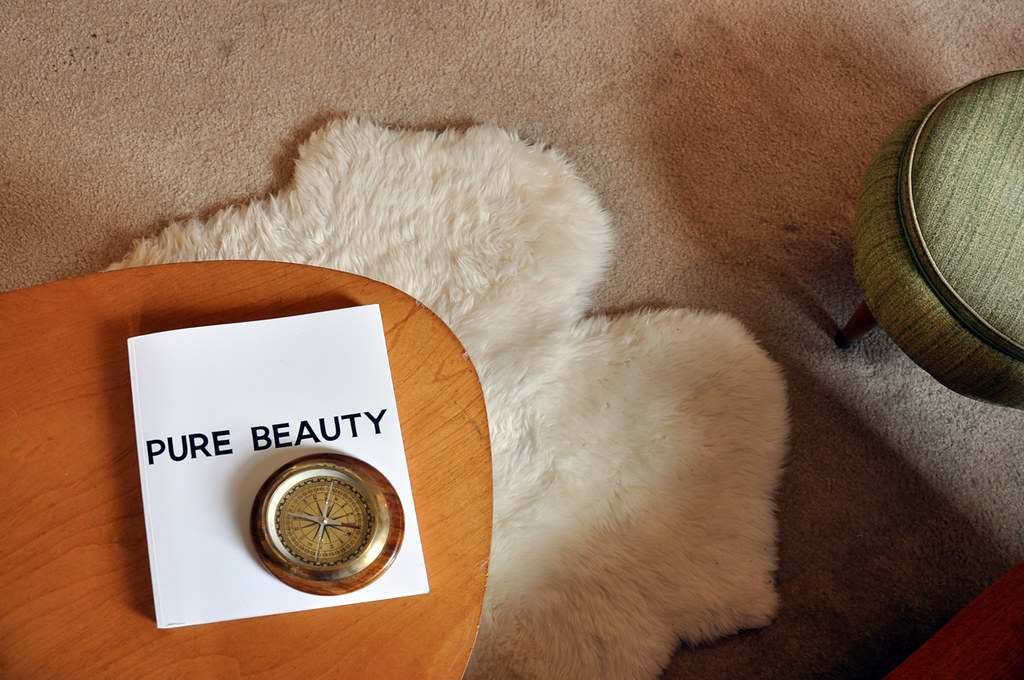
François Halard was born in 1961 in France but now spends time between homes in New York and France. He studied at the École Nationale Supérieure des Beaux-Arts in Paris [1]. Soon after, he began working for Decoration International, and then with Conde Nast art director Alex Lieberman. In 1984, François moved to New York City where he began regular commissions for several Conde Nast publications, including American Vogue, Vanity Fair, GQ, and House & Garden.


------