....
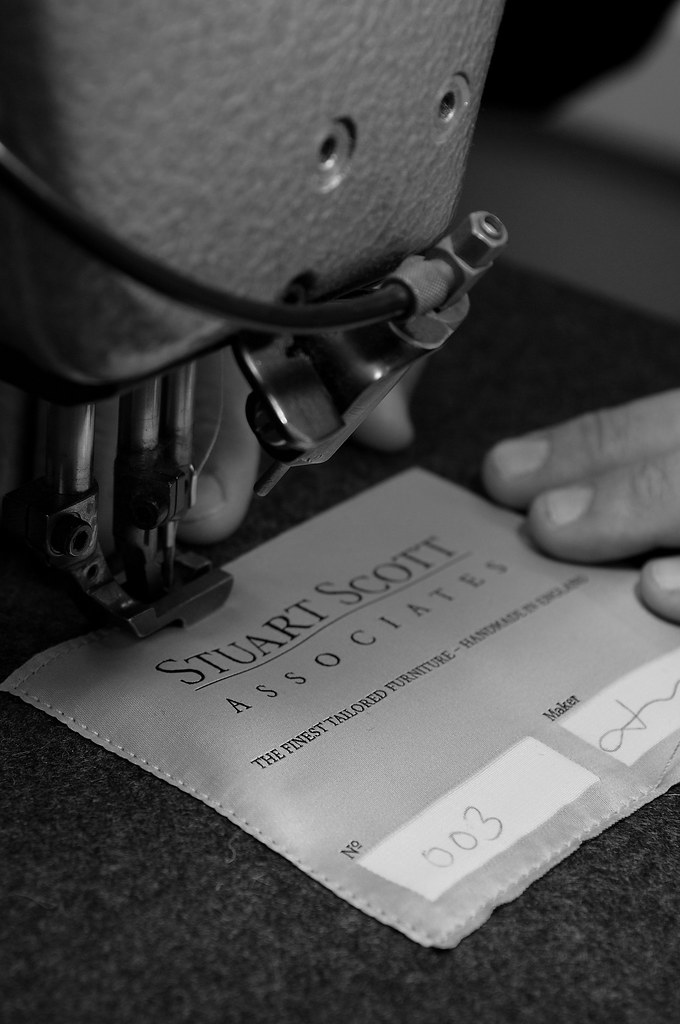
"I personally sign each piece and give a number. I keep a register of everything we’re made, a date and a reference. It’s something I’ve always wanted to do and I feel it makes the piece extra special." - Stuart Scott
When did you begin to design furniture? What were your career priors to launching your company, and how did they influence you?I received an honors degree in Industrial Design specializing in furniture and related product design at Ravensbourne College of Design and Communication in London, graduating in 1993. After this I was offered a job in Riyadh working for the Saudi Arabian Royal Family on a new Palace which involved a number of European Designers and Artists including Pierre Bonnefille, Bernard Pictet, Michael Prentice. I spent 5 years there, after which I moved to Paris and worked at
Atelier Pierre Bonnefille and then on to London working for people like
John Minshaw and Gensler – a wide range really before I decided to start my own business in 1999 designing bespoke furniture.
I learned a lot particularly in Riyadh and in Paris and this is where my strongest influences came from. The Saudi Royal’s who I worked for were big collectors of furniture and art, some of which I’d never seen before, pieces by Ruhlmann, Eugene Printz, Fontana and Dali – it was an incredible experience.
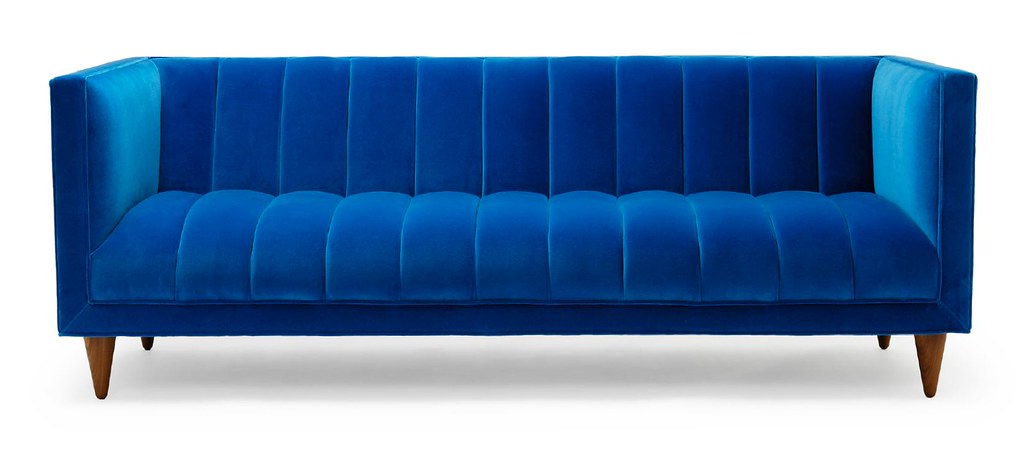 The Fleure Sofa: Solid beech upholstery frame, jointed, glued and screwed, solid hardwood legs, webbed seat and back. Built to order by hand in England.
It’s a mix really. Some pieces are drawn up firstly on AutoCAD to get the proportions, but lately I’m getting an idea and going straight into making a prototype. With chairs particularly you need to be able to sit on the pieces straight away and play around with the rake, comfort levels etc. The Occasional Tables are very much born on a drawing board but the chairs are really an organic process.
When I did the
Isabella Slipper chair, the Dining Chair version came straight afterwards and was developed in a day with the help of a band saw, a staple gun and some cardboard! Once I get to that stage my brother can take it to the next level, as he is very used to my precise way of working and knows my thinking!

The upholstery?We do all the upholstery in house as is the case with the upholstery frames. Design a good frame and this helps the upholstery process – both aspects need to work hand in hand for it to work.
What is your new collection 2 inspired from? Really wanting to do something different, to keep the collection fresh, trying out different techniques. A style, for example the fluting on the Fleure sofa led to that design. The Vertere Occasional is really about testing the boundaries of what can be turned, and it’s all done by hand.
Where are all the works made? We try and make as much as possible in house, but the Occasional Tables are made off site by trusted partners. We don’t yet have the facilities in particular to do the lacquer work.
Materials in your workroom?I have a love for Wenge and always have. It has amazing grain pattern and color. I want to do more with abstract patterns involving a mix of timbers and colors, and I’m working on some ideas based on this now. In terms of fabrics, I love the range by
Holland & Sherry of Savile Row. They offer what we’re about i.e. tailoring.
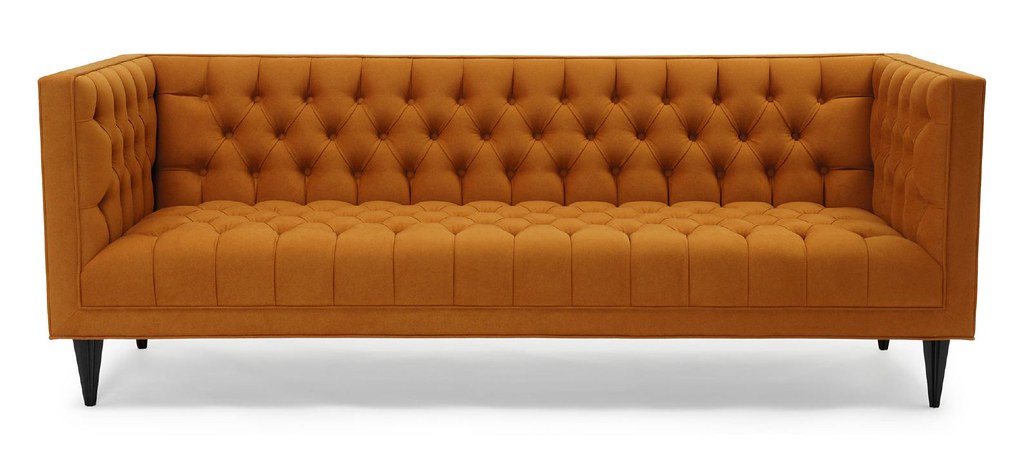 the Tux Sofa, by Stuart Scott
Inspiration comes from the past probably more than it does the present. I constantly refer back to the work of Dominique, Emile Ruhlmann, Eugene Printz, Harvey Probber, Wiener Werkstatte and Jean Michel Frank. I’m also a big fan of Eames and Ettore Sottsass and the Memphis movement!
What did you learn from your first collection that you are bringing to the new works?
The importance of detail and the importance to get the comfort levels right from the outset. There is no point in designing something that looks fantastic if it isn’t comfortable, but at the same time it’s difficult designing a chair for example that suits everyone, hence why we offer a bespoke service.
Each piece is stamped and signed. Do you personally sign each piece, and why is this important?
I do personally sign each piece and give a number. I keep a register of everything we’re made, a date and a reference. It’s something I’ve always wanted to do and I feel it makes the piece extra special.
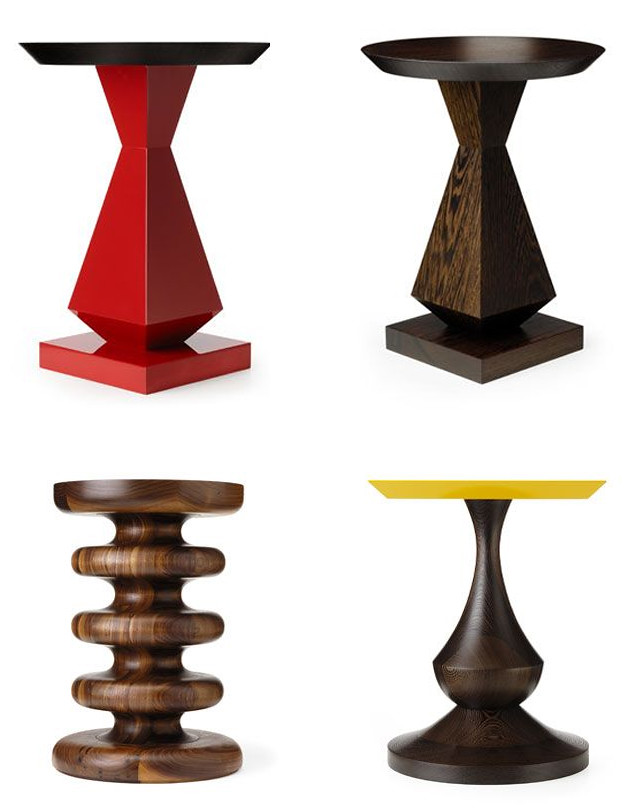
Your occasional tables are incredibly sculptural & colorful.Yes, the colors are really the ones I like, and the ones that complement the timbers used. The forms come from everything I see and playfulness is important. These tables are very personal to me, they’re very much a labor of love. I must have 20 – 30 designs ready to go and I’ll keep going now because I think the collection is developing and acts as I little accent collection within a collection. To be honest, they’re expensive to make so the idea is that the more I sell the more I can make, the money is just funneled back in to feed a personal addiction! Not good business but good fun and people tend to like them.
"From its launch at
Decorex in September 2011,
Stuart Scott has gone from strengtLinkh to strength The latest development sees a selection of his stunning designs being available on the exclusive 4th floor at
Liberty of London. Leading the way in contemporary furniture, Stuart Scott combines quality, style and a lifelong passion for design. The collaboration with Liberty coincides with the launch of his second stunning collection. These new pieces successfully project Stuart’s vision to create beautiful hand-crafted furniture with a strong design edge that is both practical and above all comfortable to use."